
Reblogged from Margosblog. I was captivated by the clarity of this, and for me its connection with Involution was affirming.

I found these three beautifully explained videos that I feel I have to share with you! Enjoy!
Reblogged from Margosblog. I was captivated by the clarity of this, and for me its connection with Involution was affirming.
I found these three beautifully explained videos that I feel I have to share with you! Enjoy!
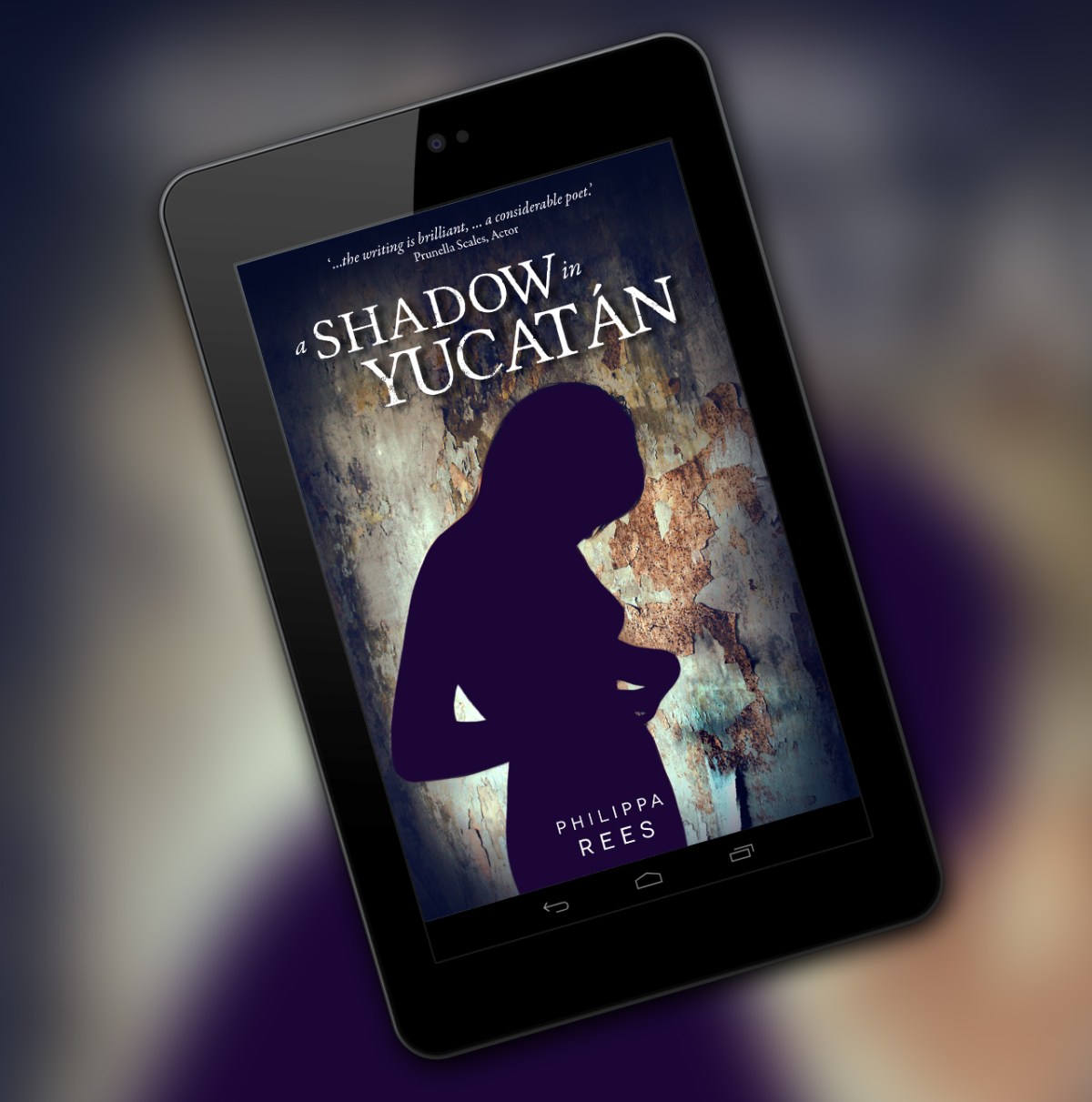
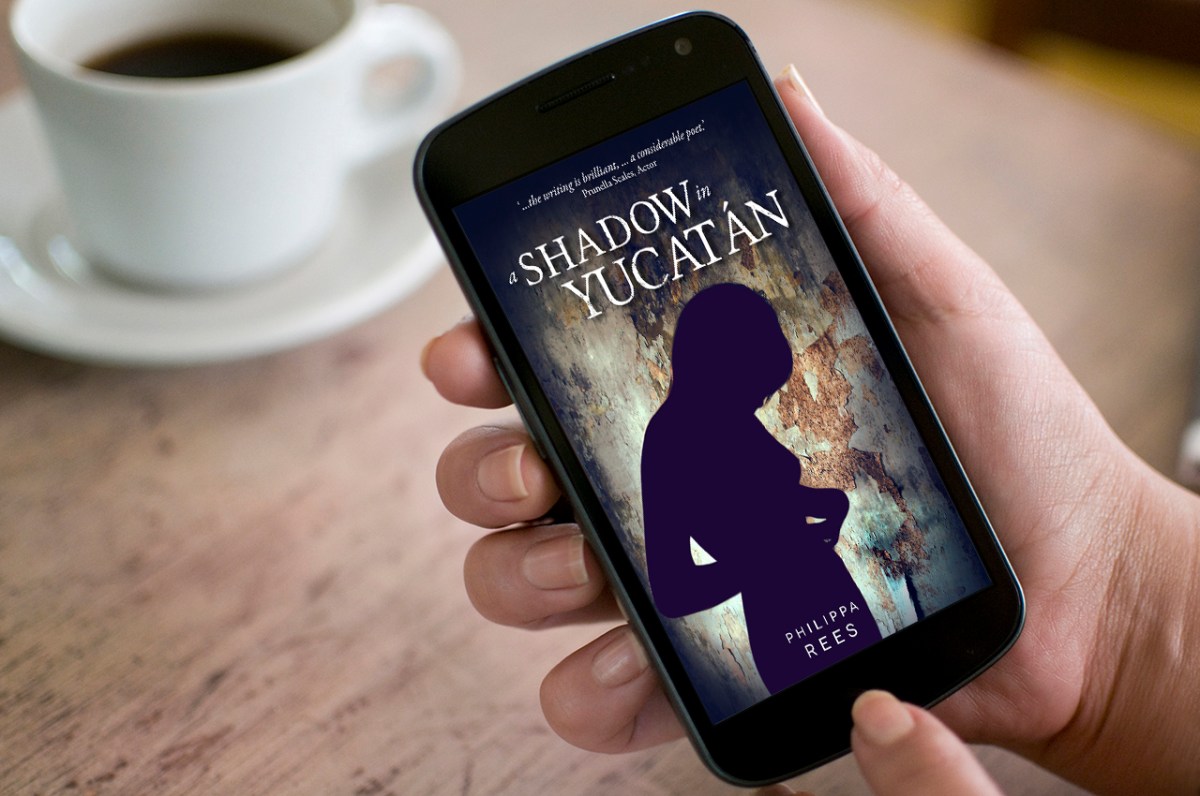
Today was the long planned for launch of A Shadow in Yucatan. Timed to co-ordinate with the Great Digital Book Giveaway. Instead it has been deleted from their site. Disaster for me but not for you. For it is ,however, still free (until 31st July) on Smashwords and can be downloaded here https://www.smashwords.com/books/view/454809
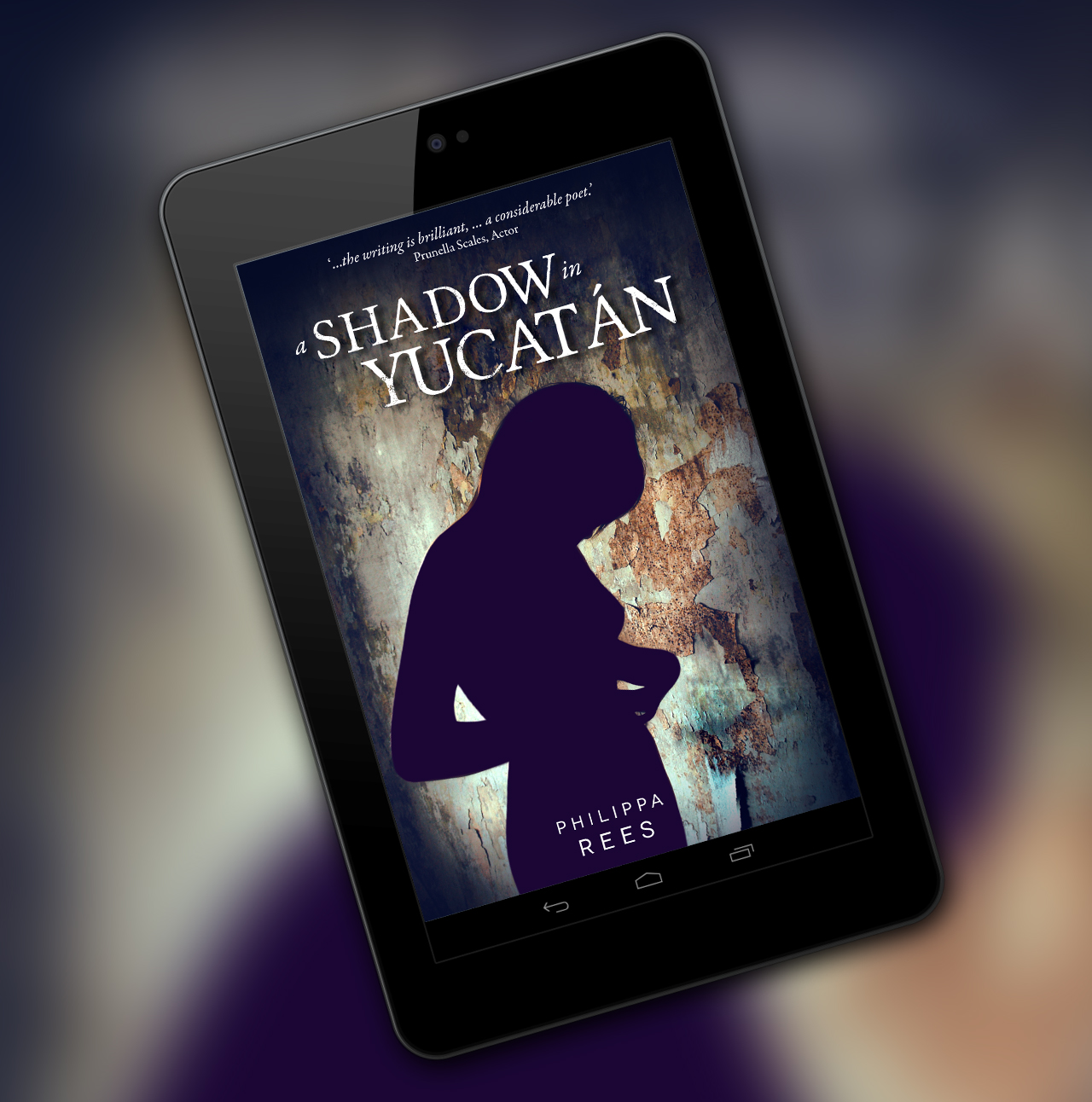
Instead of promoting I will let the reviews do that instead.
‘I was utterly awestruck by the writing skill and breadth of imaginative
evocation…..poetic, elegiac…almost unbearably intense…sensuous imagery
from both nature and modern urban living…musical, both rhythmic and
assonant…sustained dramatic tension within a simple everyday story….the
superficiality of the beauty salon is a very potent metaphor….’
Alison Jakes (Poetry Circle)
As with a highly literary novel, this ambitious story makes demands
upon its readers. As with most modern poetry it deserves to be read and
re-read…..
The story is a vehicle for some impressive poetry. It is highly emotional
and transforms the ordinary protagonist into an archetypal figure of
suffering motherhood.
‘Speech must now grow from silence and the stones that cockle the
black backs
Of women in pre-history, left alone with the consequence of men’
There is religious dimension too. Throughout there are subtle references
to the Christian Nativity, and on another level it tells of Christ’s birth
and Mary’s suffering in modern terms. It contrasts the cruelty of the
girl’s Catholic mother, with the compassion of her Jewish landlady.
There is implicit criticism of the hypocrisy of society as a whole….The
poem has a social purpose.
Katherine Knight (Real Writers)
Philippa Rees is as an immediately distinctive and striking poet
who writes with unfashionably – often brilliant – painterly verbal
play and colour, oozing with a sensuous love of language. Rees’s
almost tangible style dazzles with imagistic chiaroscuro; stark
contrasts of light and shade, subtext and texture:
This ripeness of verbiage and intrinsic musicality inevitably
bring comparisons with Dylan Thomas (particularly the densely
descriptive, rumble-tumble list- passages of Under Milk Wood): But this is not to detract from Rees’s individuality which throughout this book of poetic narrative interspersed with colourful dialogue is palpable and often beguiling…
…..A Shadow in Yucatán is disarmingly beautiful
(Alan Morrison, Editor The Recusant)
The back blurb calls ‘A Shadow in Yucatán’ a ‘distilled novel’ and it
is –a home brew, raw and omnipotent! Rees makes extraordinary the
sorrowful ordinary of an unwanted pregnancy and the resulting difficult
decisions. She celebrates the sense of community, despairs of family
and counts on the generosity of strangers. She explores problems and
finds solutions – hard through they are to take – in unexpected places
Through it we enter a world as real as we are, but as foreign to us as a
bad dream. This book is a must for any intelligent reader!
(Independent Reviews: SP Magazine)
This seems to demand dissemination! via Jo Robinson.
Desmond Mpilo Tutu won the Nobel Peace Prize in 1984 and was only the second black person ever to receive it. In 1986 he was elected archbishop of Cape Town, the highest position in the Anglican Church in South Africa. In 1994, after the end of apartheid and the election of Nelson Mandela, Tutu was appointed as chair of South Africa’s Truth and Reconciliation Commission to investigate apartheid-era crimes. His policy of forgiveness and reconciliation has become an international example of conflict resolution, and a trusted method of postconflict reconstruction. He is currently the chair of The Elders, where he gives vocal defense of human rights and campaigns for the oppressed.
Archbishop Desmond Tutu, Nobel Peace Prize winner, Chair of The Elders, and Chair of South Africa’s Truth and Reconciliation Commission, along with his daughter, the Reverend Mpho Tutu, offer a manual on the art of forgiveness—helping us to…
View original post 210 more words
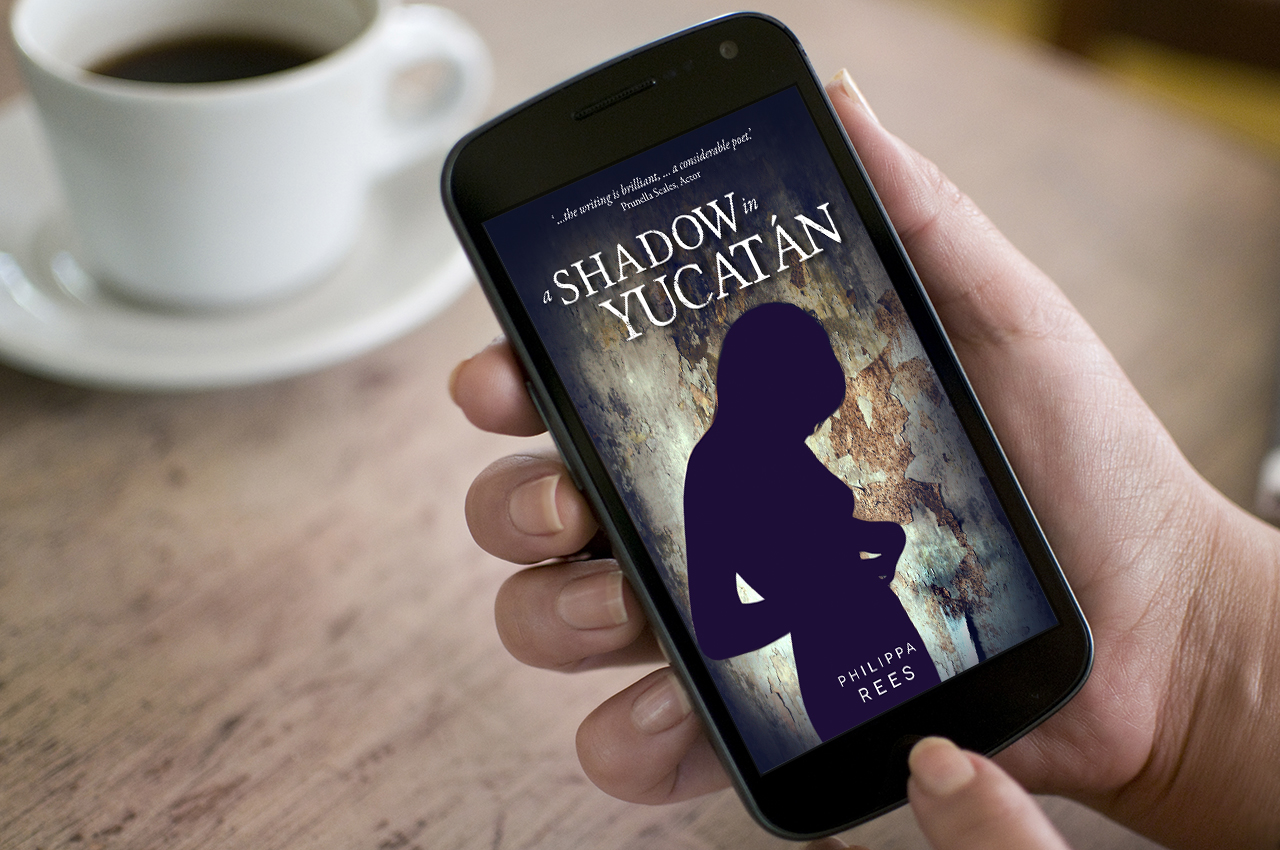
On July 14th many authors are making their books free for download as part of the Book Giveaway. A Shadow in Yucatan ( see sample to read on Bookbuzzr on this site’s right column) is one of them. You can find the giveaway library on this site. If you enjoy the book please consider leaving a review on its two Amazon listings. It only takes an hour or so to read! It may clarify why older people look so disappointed!

This Review has just appeared in Caduceus Magazine (88) This is a stimulating quarterly offering very diverse articles on Spirituality, Consciousness, Ecology and Healing. It is possible to subscribe to the printed or on-line edition or buy a single copy.
INVOLUTION- An Odyssey Reconciling Science to God
Philippa Rees
CollaborArt Books 2013 Pb 427pp (£17.99/ebook £4.99
ISBN 978 0957500204
Reviewed by David Lorimer
Philippa Rees is a polymath brought up in South Africa who studied literature, science and theology and who has brought these strands together with her own experience in this brilliant epic poem telling the story of the Western Odyssey of the mind with parallel explanations in 150 pages of notes.
She has been working on this theory of involution for many years and was in correspondence with Authur Koestler, Konrad Lorenz and E.F.Schumacher in the 70’s. The nine Cantos of blank verse- a dialogue between Reason and Soul…..read more on Scribd
Flowing Forward, Looking Back.- A refreshing interruption.
I was introduced to this touch-tag relay by Ashen Venema, whose blog and website is Course of Mirrors where she posts serene and stimulating reflections on what catches her thoughts. In that sense her title is apt (although it is also the title of her novel soon to be published). She is a flashing mirror that concentrates light on an area and helps it catch fire. I never fail to draw something new and quietly inspiring from her occasional posts and beautiful photographs.
I have always avoided blog tours partly because just thinking about waving myself or my book through a daily marathon is exhausting, and its self importance seems inescapable. (Guest posts are different; they seem a kind of marriage of interests.) But I can do it once (and willingly) when writing binds me to others and paying it forward prevails rather than self-promotion. An opportunity to highlight the generous community of writing friends was much more attractive-so this blog baton now falls to me, en passant.
What am I working on?
Right now I work to distract myself from the tarnish of achievement, much more aware of the tarnish than the achievement. Involution- the book just published, has written my life, gone through a series of incarnations, until it cried ‘Enough already’ and forced me to be reconciled both to my inadequacy for the task, and to the compromises that reconciliation required. It forced nose-to-grindstone and whole nights of sleepless note-making (and moments of wondrous uncorrected flow),until it was finally finished. Five years it took to refresh historic research and write; but since publishing I have been beached, like a cuttlefish, empty of inspiration.
To find a structure to the day I am digging out former short stories of both African, and European encounters (Minding the Gap between Old and New World attitudes) and writing blog posts that reveal my restless examination of why the bleedin book chose me ( when there were so many others, better equipped). I am searching through the equivalent of the sock-drawer for answers. The prosaic socks are like fragments of clothes, once loved; my grandparents and their grand disdain for the ordinary; my children and the education they afforded me (instead of the other way round); the country that first nurtured independence and bloody-minded refusal to accept given answers; and above it all, the wonder of the English language in which to convey all this.
My life was written by a book, and nothing in that life was irrelevant. When I have finished sorting I might find an answer, and from that answer new inspiration. Meanwhile this naked life is all relevant to the book’s domination of its author! Those of you who have ventured into the African Quilt posts (below) may have wondered why they were written- blame the hair-shirt itch of the book and pinning its provenance.
How does it (the book or the writing in general) differ from other works?
I think this fence is best taken at a gallop. The history of science written as poetry? Creative non-fiction? I don’t think I need define how this book differs. The ‘why’ is perhaps more interesting. First because the real subject is what lies behind the scaffolding of science—the cathedral of consciousness. Close-knit prose weighted with the necessary evidence would have obscured that subject. Economy: the science is familiar, but used as evidence for a different hypothesis- that science itself has been the recovery of that cathedral, memory through inspiration. Also, addressed to those willing to embrace subjective experience- unlikely to be scientists in the main. Finally, because I have lived with this book for so long and our marriage needed spicing up; the moment I wrote poetically it flowed, impressionistic, broad-brush, and I could tuck the necessary evidence in left brain endnotes. I hoped to entertain; a few readers are beginning to appreciate that. It is not as ‘worthy’ as it may look!
I must now confess to a phobia: I hate being bored by the prosaic or predictable, and the idea of boring other people, and that includes readers. This phobia is now taking the form of searching for a new economy that will not mean minimalism. The richness of language is my greatest joy, using it like a human hand, a tool to shape any kind of construction, hopefully without leaving any traces of effort. Recently that has meant narrative poetry, economical words to tell tall tales. Involution is a poetic journey through Western scientific history, and another work, A Shadow in Yucatán is a simple (and tragic) story, mythical in its echoes , that recaptures not only what happened to the main character, Stephanie, but what happened to the glory of the sixties in which she lived, betrayed by indifference to its promises. Her story was a kind of magnifying fractal of her (and my most fondly remembered) age.
All my work is about eccentrics, or mavericks, individuals rejected, but in their own ways, heroic, courageous outcasts. I seek to sketch them in universal terms, so that what remains (I hope) is the familiarity of recognition, not of their circumstances but their resilience in which the unique calls out and reflects the hunger for meaning ( and meeting). The individual is the face in the fractured mirror, finding itself.
My writing process?
This is much more difficult to answer. I can tell more about what it isn’t than what it is. I have an idea, it might take shape in a dream, in which a whole story is encapsulated, atmospherically. Sometimes there are small details to launch a story, often no more than a smear of sympathy for something not yet formed.
It feels like a current persuading me to swim, so I wade out.
What then happens is the current gathers strength, and tows me into a tide. On a good day, and sometimes for whole weeks, I dive and surf that tide, and follow characters that swim with me, and signal for attention. Sometimes they simply wade out and dry their hair, and the story is done, or they are no longer important and it continues with others. Always the characters take hold of the story, and gain weight, and speak in ways over which I have little influence. Mostly I like them, a lot, but even when I cannot, I come to understand them, and their inhibitions, and if they are smaller people than the ones I like, I try to offer them chances to grow. When they resist it gets explosive, and as surprising as shouting in a cricket pavilion: it should not happen, but it does. Those who read ‘how to write’ books will know this is entirely the wrong way to go about it. I have to be ‘grabbed’ I cannot contrive.
I cannot plan their adventures; they always have ideas of their own. One I am working on at the moment started with a man shaving in a shack in a wood in Vermont. That was very inconsiderate of him, since I have never been to Vermont.
Why do I write what I do?
Involution excepted ( that grabbed me by the collar) I have never thought this through exactly. I think what and how I write is distilled from the things I love, language, people, individuality, and how they reflect the natural world. I like to expose their life, like hatching out ducklings, and watch them waddle and then swim, some better than others.
None of this leads to any continuity, or building a career, because nothing I write follows upon anything else. A reader who might be engaged with one work, will not necessarily read another. Genre and ‘career’ do not find purchase, unfortunately.
This is an obvious disability in a writer, and suggests indifference to readers, but this is rather like suggesting that a cook who has perfected a good lasagne should cook only lasagne, or merely introduce sun-dried tomatoes or anchovies. I suppose everything I write is a form of exploration, of myself and what I feel about what’s happening on the page, and the changing skies of vision. I hope to offer that vision to a reader, as I would meet each person at a party, to present an aspect that might interest them. Different stories wear different clothes, changing language, altered mood. I have never been able to do anything twice.
I am reminded of an interaction; I was once in full spate talking to someone I had only just met. A third person entered the room and said ‘This sounds interesting, what were you talking about?’ Silence followed. He looked at me.
‘Ask her’ I suggested ‘she was listening’.
If you are doing the talking (as a writer) it is only the listener (the reader) that knows what you were talking about and if it met their interests enough to linger or disagree.
That’s enough about me.
My introduced baton followers are:-
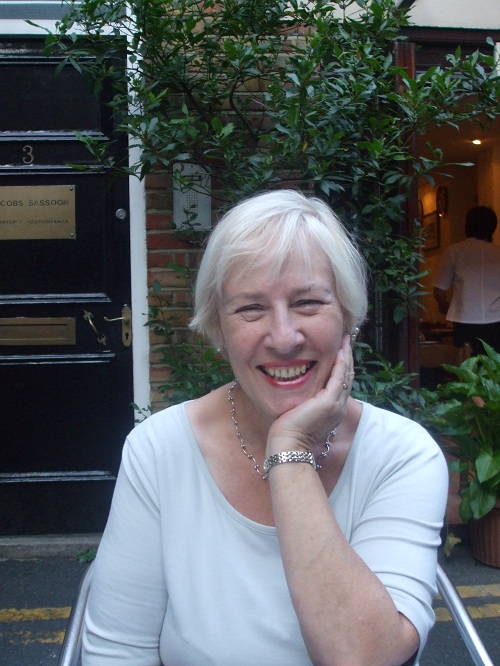
Loretta Proctor who first offered me sage advice on the perilous slopes of self-publishing, and continues to reassure me. She has boldly published several novels, blogs, tours and talks without a petticoat of doubt ever showing. We are also linked by a shared genetic connection to Elizabeth Barrett Browning- on opposites sides of her fierce parental forge. I think Loretta got the gentler side (farming and dairies), whereas mine was that slave driver from whom EBB fled at dawn.
Loretta is an Anglo-Greek, born in Cairo, Egypt. Her dual nationality led her to question the theme of belonging to two different and diverse cultures. From this quest came her first published novel: The Long Shadow, set in WW1 Greece, in which the ‘hero’ is also Anglo Greek and makes an odyssey to discover himself. This book is now also being published in Greece and will be out in November 2014. She has since written three more books, the latest, Dying Phoenix a sequel to The Long Shadow. She loves nature and spiritual poetry, art and beautiful gardens. Her blog (Books and Other Things) and all her books can be found here.
Joanna Sormunen I encountered more recently and so much enjoy her courage and passion for the work she does, and the enthusiasm for the landscape and people so far from her home. Her recipes (Finnish tiger cake!) show that longing is present, however. Food always remembers.
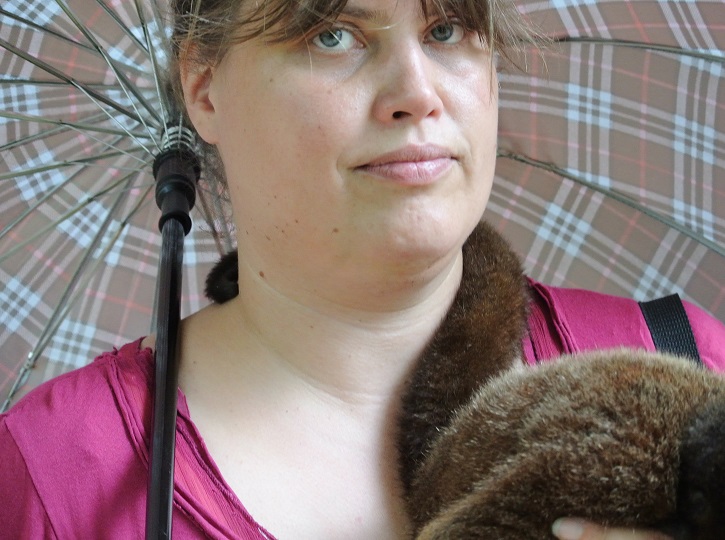
Joanna Sormunen is a Finn living in Ecuador. She writes a blog called Ecuador Joannan silmin – Ecuador in my eyes, while writing her novel and searching a publisher for it. She is a ‘psycho-pedagogist’, or a special education teacher, and works for the Finnish Free Evangelical Church in their mission with Kichwa indigenous people in Ecuador’s Amazonian region. She is fascinated by their culture and Ecuador in general and wants to document it all in her blog and in her photography.
Susan Scott, a fellow South African who walks the very streets and beaches I long for, has been like finding an old friend that seems familiar. She lives where I can imaginatively call in for a coffee under a Jacaranda and holidays where I can hardly bear to imagine, so hard do the waves crash upon the rocks of nostalgia. Through that familiarity her blog and mine are almost twins, comforting twins who remember the same things, slightly differently, and not a few years apart! Her recent A-Z challenge for posts shared with another Jungian friend are all pithy reflections on a variety of topics.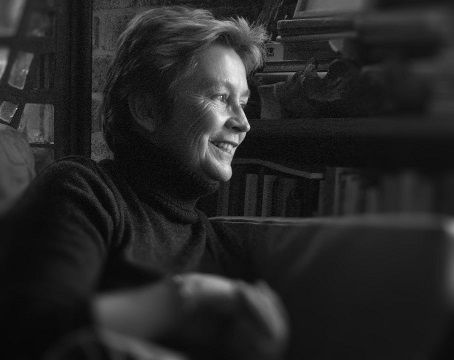
She offers a verbal ‘selfie’:
‘I’ve lived in Johannesburg South Africa for the last 35 years or so. Is it home? – a question I always ask myself. For most of my life I’ve had a fascination with psyche and soul, consciousness and unconsciousness, dreams as treasure house. The opposites are ever present in life and impact negatively upon us when e.g. we are too fixed on an extreme of the pole. The necessary paradox of them, and their drive towards a closer relationship between non-exclusionary opposites is what is inter alia of interest to me.
I’ve been blogging for the last 3 years, tentatively at first and now more regularly. More recently I took part in the April 2014 A-Z Blog challenge (and last year); this year with Dr. Susan Schwartz, Jungian Analyst in Phoenix Az. We used this year’s challenge to write on ‘Aging & Becoming’. Each letter of the alphabet from A-Z for each day during April except for Sundays, was represented. ‘A’ for Attitude, ‘B’ for Body, ‘D’ for Death etc right through to ‘Z’ for Zero. Our posts were psychological, as have been most of my posts in times past. The 2 Susans are currently writing a book on ‘Aging & Becoming’ and it is by no means a ‘how to’ book. It is a psychological look at Aging – and Becoming.
(Links to the 2014 A-Z blog challenge can be viewed under ‘categories’ further down on right hand side bar.)
I love hiking and walking and the sense of my body inhabiting different spaces in different scapes. I love being at the sea, the bush, the mountains and here at home feeling a part of it all. I read voraciously, one of life’s greatest pleasures. I have two beloved adult sons each self-employed in the arts and loving every moment of it. The younger is a musician, the elder an animator. My hard working husband is a medical specialist.
Susan Toy’s wonderful website for Authors.
 Philippa Rees
strong>What is your latest release and what genre is it? The latest book is Involution – An Odyssey Reconciling Science to God It fits no known genre. Poetically written science is unknown.
Quick description: The book is DNA shaped; half is poetic narrative through the chronology of Western thought about the nature of Nature, half scientific footnotes to flesh out the narrative with scientific and historical detail. In the poetic journey Reason (spiraling science) and Soul (spiraling painting and music) intertwine two ways to knowledge, the intellectual and the spiritual, and show the process of ‘Involution’: the encoding of consciousness in all forms of matter, and the recovery of this encoded memory – through the inspirations of science. This offers a new way of understanding how the intellect of science became separated from spiritual understanding; from the holism of early thought, through divisions and subdivisions and now re-approaching…
View original post 316 more words
The Clamour of the Daimon- Motherhood Part Two.
What might have been and what has been
Point to one end, which is always present.
Footfalls echo in the memory
Down the passage which we did not take
Towards the door we never opened
Into the rose-garden.
(T.S.Eliot. Burnt Norton)
My second shot at renewed motherhood arrived without formal invitation, and was as ill-timed as my own birth had been. Teaching in a Catholic convent as a now unmarried mother, a swelling belly was as unwelcome as an invited priest suddenly swearing from the pulpit. The fact that the father was their beloved Director of Studies and the only honorary layman in a fluttering coterie of veils only compounded the disaster. He was (tactfully and regretfully) invited to resign.
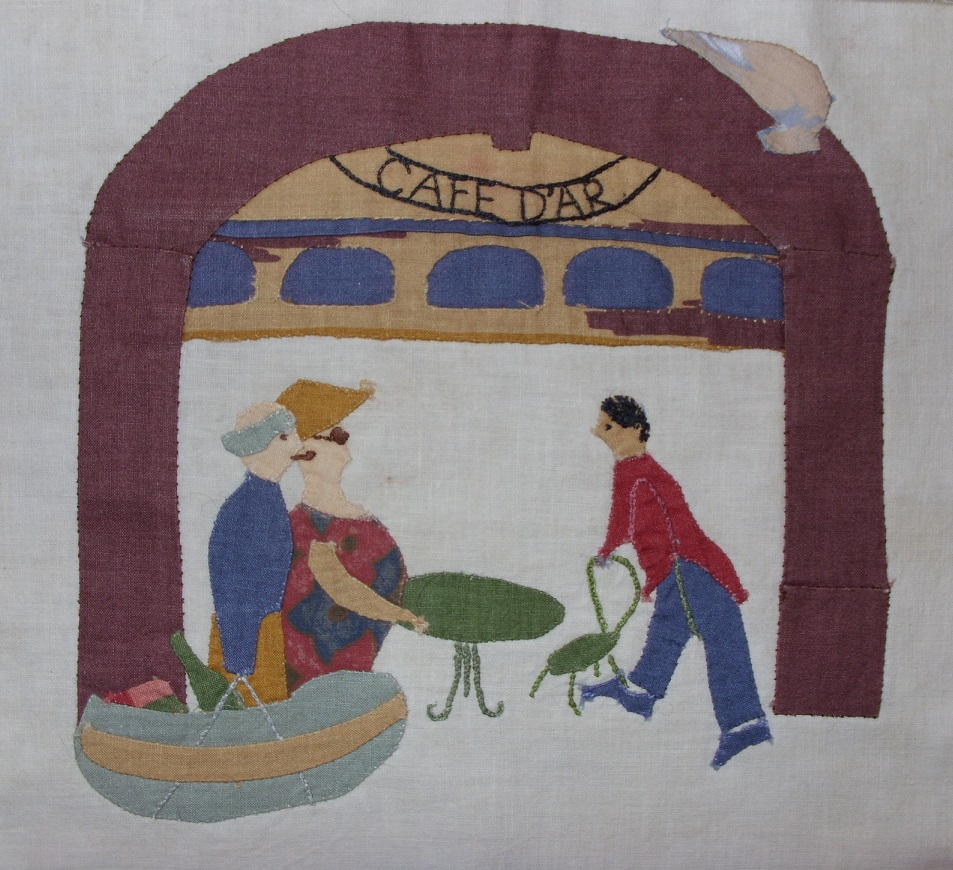
Without a job between us we went to Florence to ponder on the future, if there was to be one. He had never been out of England, (except in the war in uniform) and we found a frescoed room near the Pitti palace, with a roof garden overlooking the Arno, and bought a Moses basket in the straw market. The bambino that should have occupied it was, instead and disappointingly to all clustering eyes, filled with bottles of wine and presents of Panforte for the children yet to be introduced. His respectable past life was over, and at fifty he contemplated unemployment with a baby on the way, two others to support, and an irresponsible scribbler, with mystical tendencies, growing larger by the day. He was thrilled, thrilled but terrified. He saw winter in Florence as though in a dream, a world of incomprehensible promise, and beauty, empty and shuttered with vacant streets filled only with literature and, perhaps appropriately, a galloping Renaissance, yet to breast the hill.
My second exposure to motherhood, was as though the first had been a pre-run for two more, to get better at it; again two girls and exactly the same ages apart ( to the day) as the first two. Life was on edit and redraft.
The first of the second pair, born at noon on a cloudless summer Sunday, introduced me to a conspicuous daimon, who scarcely asked her consent before stating his intentions. The doctor who delivered her, pronounced her ‘perfect’ and departed to play tennis. Her arrival filled with sunlight was the renewal of a life that she had come to teach me to navigate. She contemplated the world through wide open eyes, as though simply checking her recognition. Each phase was mastered and ticked off. I remember no tears or sleepless nights, simply a steadfast walk to inner certainty. By four she was a fluent reader with a passion for books devouring stories about children left to discover for themselves: Laura Ingalls Wilder took her to the prairies, Arthur Ransom to the Lakes, the Railway Children covered her in steam and the Wierdstone of Brisingamen terrified her, delightedly. C.S.Lewis was constantly bookmarked with a frayed nappy-rag, and Aslan shared her bed. I think he still does.
The preferred were about intrepid courage in difficult circumstances, usually the result of grown ups, screwing up. That figured. Like me her first passion was horses, and riding, spending every moment at the local stables where retired polo ponies covered in mud, saw out their days for children who curry combed, plaited, saddled and cantered about unsupervised through lanes of Lady’s lace and nettle.
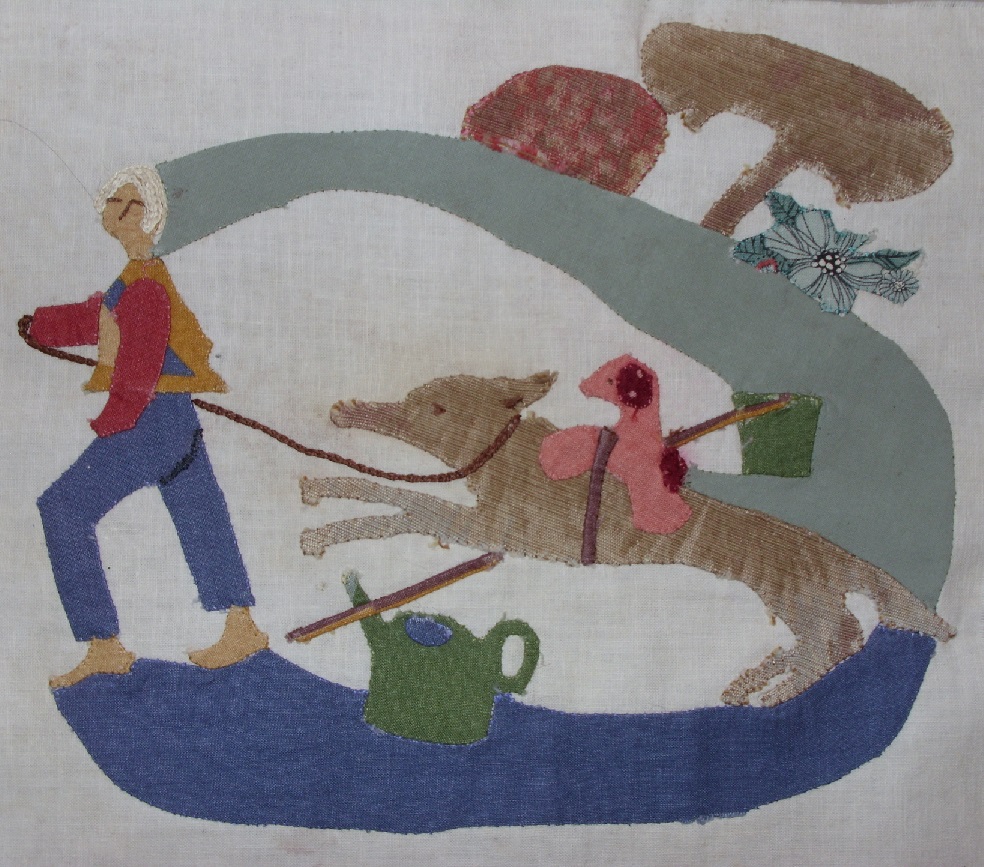
When there was no pony the dog was saddled with her lolling and threadbare pink lamb and put through its paces over jumps made from any available stick or support. It took us years to discover why a collie that had never been fed, except at supper time, constantly begged for biscuits! ‘But I thought they are supposed to be so intelligent?!’ Since I was never a diligent laundress, the crumbs in the pockets were never found. I had assumed a willing collaboration; mothers can be incredibly blind.
These two passions for wild terrain and horses found a focus in a sudden and dedicated passion for American Indians, whose rugs, tepees, feathers and moccasins littered the five year old’s cell, and whose symmetrical designs in black, ochre and red were taken to art. When an elderly godmother announced that she was going to visit America she offered a caution ‘I wouldn’t bother going all that way, the prairies are not what they were, and there are hardly any buffalo left’! Her world was all in books and in the past.
Then the daimon took its firm hold on her collar, getting serious about the violin she was given for her sixth Christmas. The violin and the daimon took the opening bow together and the child disappeared. Playing the violin was all she wanted, in life: Except for horses— they remained—to be joined later by elephants. At seven she busked to streets of spectators in Spain, and kept a festival on ice in Portugal until the proper band sobered up. Playing was as natural as breathing to begin with. Only after a serious fall and a broken collar bone it became necessary to choose. Broken fingers, wrist or elbows was no longer an option, even the collarbone would raise its complaint, later. The daimon, given its head, is a ruthless master.
Unlike the unfathomable daughters that had preceded her, this was the easiest child to guide and provide for. She took the reins, what she was and needed was never in doubt. Finding teachers that took a six year old’s demands for technique, scales and studies was another matter. They all thought it should be fun or yoga and country dances. All local teachers excused themselves, finding her seriousness suspect, and incapable of feeding it.
I was, of course, accused of being one of those ‘pushy’ mothers. Little did they know I could hardly run fast enough to keep up with the instruments, strings, urtext scores or the expense of the few who would take her seriously but who taught in the Conservatoires and charged accordingly. I knew nothing about the world of musical education, or its ruthless demands for knowing the right people. My Sundays were spent driving to London and using the available churchyard yews for essential purposes, while she was taught under a lofty coffered dome by an austere Japanese maestro. Her daimon lashed its tail over time and our very limited bank balance.
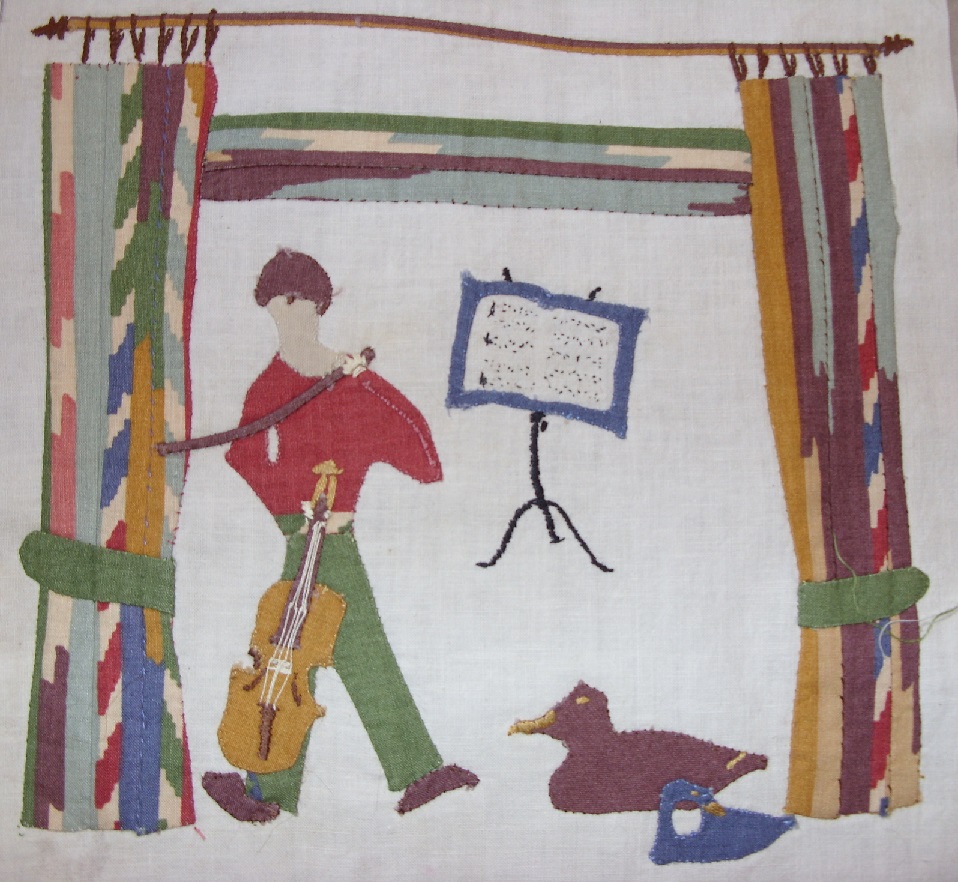
It also whipped up the jealousy of her sisters. Her younger sister also demanded a violin and played it with consummate ease, much more fluent, dextrous, and flamboyant. She wanted no bothering with scales or technique and refused to practise. Look it’s easy! It was, for her, because physical mastery came naturally, music was incidental. Yet the convincing fluency bought her an education, and the affluent school that gave her a full music scholarship introduced her to her other daimon, the ease of finding money and those that had it. Life, since, has trickled coins into her lap: From University she was head hunted before graduation, and she has never yet had to apply for a job. The violin has never been out of its handsome case since she played the Bruch violin concerto at a final concert and packed it away. Music was the core of existence for one, the means to ease and privilege for her sister. One language, two interpreters.
For me music and the disciplined training it demanded was the trapping of that sun through the bars of industry, the only thing that kept me connected to what I had turned from, for the sake of my second-chance daughters, and the only consolation to which I could willingly harness myself without too much regret. I attempted to master the cello, founded an orchestra and built a concert hall, since I knew none of the right people. Music linked me to early dreams, and to the highest of human aspiration, to articulate feelings, not merely to think.
So it incubated another refinement necessary to re-working of the book. It was the power of music that sought expression through poetry, the cadences of words, their evocative rhythms, and the shaping of themes, unconfined as to meaning, but no less accurate to the interpretations of the heart. So our daimons inter-twined: I needed her passion for music to educate my language for the passion to communicate ideas, ideas deeper than the intellect alone could apprehend.
My daughters have all held up mirrors to define my deficiencies, and to refine the conviction that nothing is without meaning, and that each partakes of All, but none will conform to expectations. Everything they became was evident within the first year, had I been more perceptive. The first walked away, seeking emotional disengagement, and now undertakes intrepid solitary journeys to remote African areas to survey for dams or roads. I’m told time out has sampled bungee jumping and white water rafting. The second is affirmed by domestic and parental perfectionism and bakes moist sponges for beautiful serene achieving children. The third still seeks service to music, teaching and playing whenever music takes the baton rather than egotism, and the fourth is still trying to discover where the pearl in the world’s enigmatic oyster might hide.
I hope I have finally learnt to get out of their light. It has taken much too long.
The book’s final resurrection, after forty years, is now no longer a theory, as it was originally, but a celebration of all creation and all creativity. It took its final shape from sharing the longing of one daughter for whom playing Beethoven was more vital than a longed-for pony. Longing is one thing I feel I have come to understand, more potent and present when denied. So Involution is entirely about longing, for recognition, for expression, for understanding, and all those inspired creators driven by its incremental refinement, to lose themselves and be carried towards a wider sea, and take us all with them.
Stillness now the new persuasion
Imperious stillness fills the ears…
The unmarked stave the new horizon
Makes music’s journey new, explicit;
To hollow the heart for a deeper longing,
To finger the strings of a naked thirst,
Prepare the ground for a joyful breaking…
Returning to silence its borrowed jewels of song.
(Involution: Canto the Seventh)
The Clamour of the Daimon- On Being a Mother
(Quilting Daughters)
The child is father to the man, each ensures
The safeguards to their hungers…
The correction of residual crimes…
Denial of appetites outgrown…
The shaping of their talents
Offers incense to the brazier burning
On the altar of mankind.
(Involution-An Odyssey…)
Blogs are supposed to have a focus. Mine, seemingly wide-ranging, is all allied to the book, Involution. A Book about Everything that needed all my living to supply its vocabulary and much of that living was motherhood. In this, like all mothers, I had to feel my way, and thereby come to encounter my daimon’s determination to wrest control.
My last post focused on my mother, and on being a single daughter, an only child.
As a perceptive comment to that post noted, everything recorded presupposed the book recently published; the early and necessary independence, into which a whirlwind experience threw everything into the air, rearranging all the components of life and leaving little but a bloody minded opposition to coercion or conformity. In every way I had to start afresh. In relation to motherhood one central pinion anchored resolve, the perception of what failing her daimon had led to in my mother, bitter regret. My inopportune arrival blighted my mother’s life, neither her fault, nor mine; a fact nevertheless.
Being inopportune, always too early, has been a constant. This book was conceived forty five years ago, forty years too early for its acceptance. A better acquaintance with my daimon probably needed the necessary dislocation provided by time’s brake. It and I had an argument to undergo first. James Hillman’s extraordinarily powerful book ‘The Soul’s Code’ has helped put it all into perspective. Character finds wider cracks through which to enter as we age. The daimon or occupying genius (the active element of Soul) in each of us struggles against the distractions of middle age and of parenthood. It snakes its way through impediments and often disappears, reduced to a few remembered dreams, the inexplicable impulse, or sudden blinding shafts of recognition.
Between the book’s early failure (with two small daughters in tow) and its recent incarnation more motherhood intervened. That also required the mastery of house building, mixing mortar, carpentry, drains and daily doing at its most basic. I had flown too close to the sun, melted my wings, and fallen, badly burnt: the discipline of motherhood would re-connect me to ordinary life. It was the re-education necessary to render the sun a softer and more benign presence threaded on quiet days, sliced and apportioned by welcome oblivious nights of exhausted sleep.
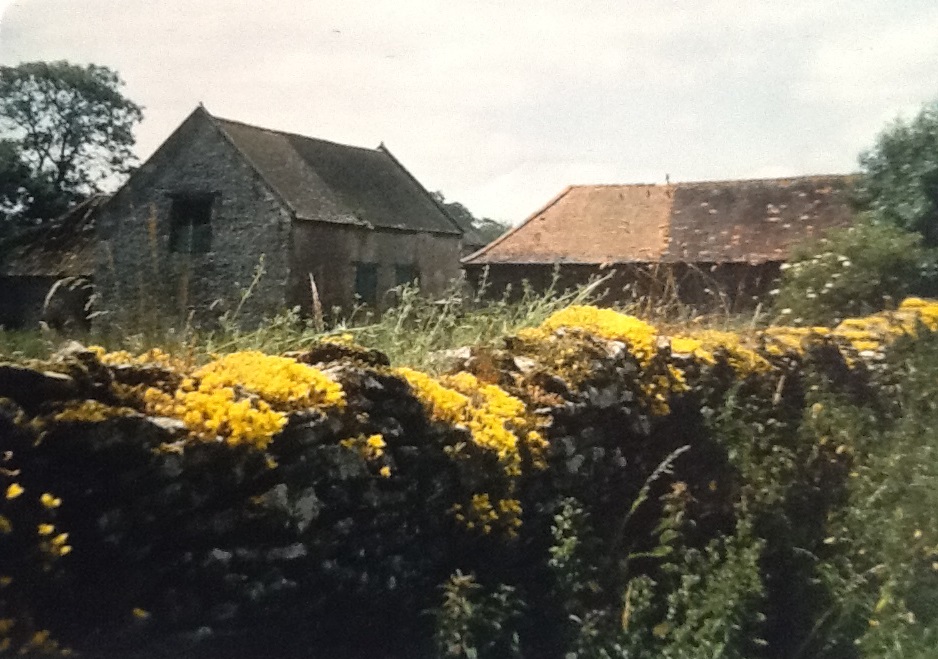
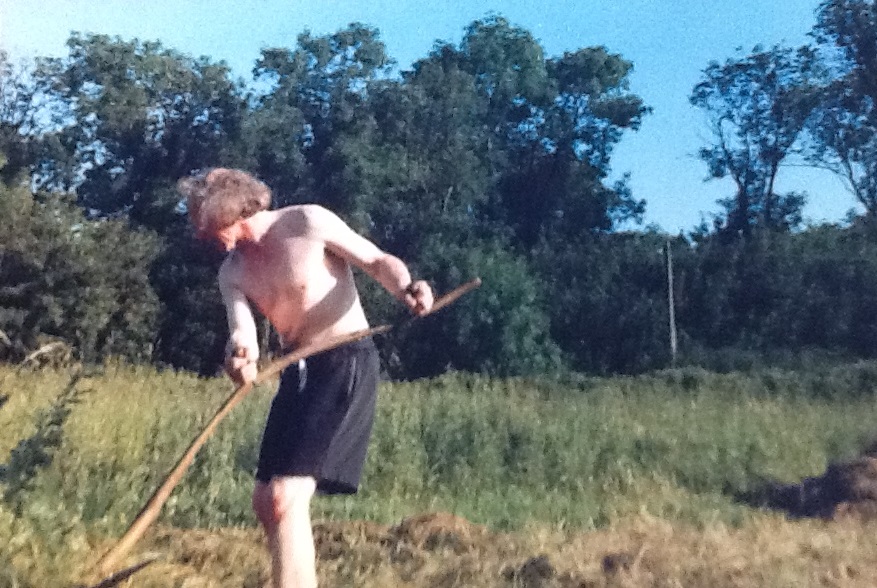
The re-education also introduced a new realm of experience that would prove to be necessary to extend my vocabulary into architecture, design, music, the hunger for time to read and on being servant to necessity. The last was probably the most important.
In talking about my mother, I reverted to memories, and she, now safely dead, would be unable to correct them or to argue and be unlikely to feel aggrieved. I feel I can count on her sympathy. Not so with my still very alive daughters. They would be mortified to be identified, and they have daimons of their own, refusing to be pinned, so I must confine their existence to what they did for me.
That seems sufficient, because I intend to examine the effect of both my childhood and theirs on the conceiving of a book. It is creativity at its broadest that draws upon everything, emotional and psychological, academic and philosophical, each intricately facets of the same enquiry. Who am I? Why am I here? Why did I come through that portal (my mother) or give birth to that child?
What shall I do with all this experience before I depart?
My own mother’s tight-lipped stoicism, which made my very existence a burden, had led me to take a vow at about sixteen. If I ever had children they would know, because I would share with them, all things: anger, impulse, confusion, and impetuous affection. Words would not be withheld. I would never have them say, as I had, ‘I would rather you beat me than stay silent, why won’t you tell me where or in what I have failed?’
If I had children I would also have more than one; they would have each other: An insurance against my own shortcomings.
I struggled to unite my four daughters in what I believed was a single family. Therein lay my failure to understand that unity requires the consent of all, to each. Much later I had to accept that I had two families, severed by the father of the first, whose refusal to include the second split us, as though with an axe. The father of the second family accepted all, in an almost saintly indifference to distinctions between his and another man’s children.
Daughters Part One
My first marriage had yielded two daughters, so different from one another they initiated the most essential lesson
Your children are not your children
They are the sons and daughters of Life’s longing for itself.
They come through you but not from you.
And though they are with you yet they belong not to you.
(Kahlil Gibran- The Prophet)
The first at ten months walked away, escaped any lap, shunned hugs and kisses, threw herself into deep water, climbed up dangerous heights. She needed nothing from me, except the freedom to be left alone and watched from a distant eye. She asked for very little, gave very little. As an ingénue mother I mistook this for precocious advanced development; hurrah for independence! Her sister was the exact opposite, needing a great deal of affection, constant reassurances and encouragement. Honing maternal skills required flexible adjustments between these extremes, one impervious, one hypersensitive, one over confident, one with only tentative questions.
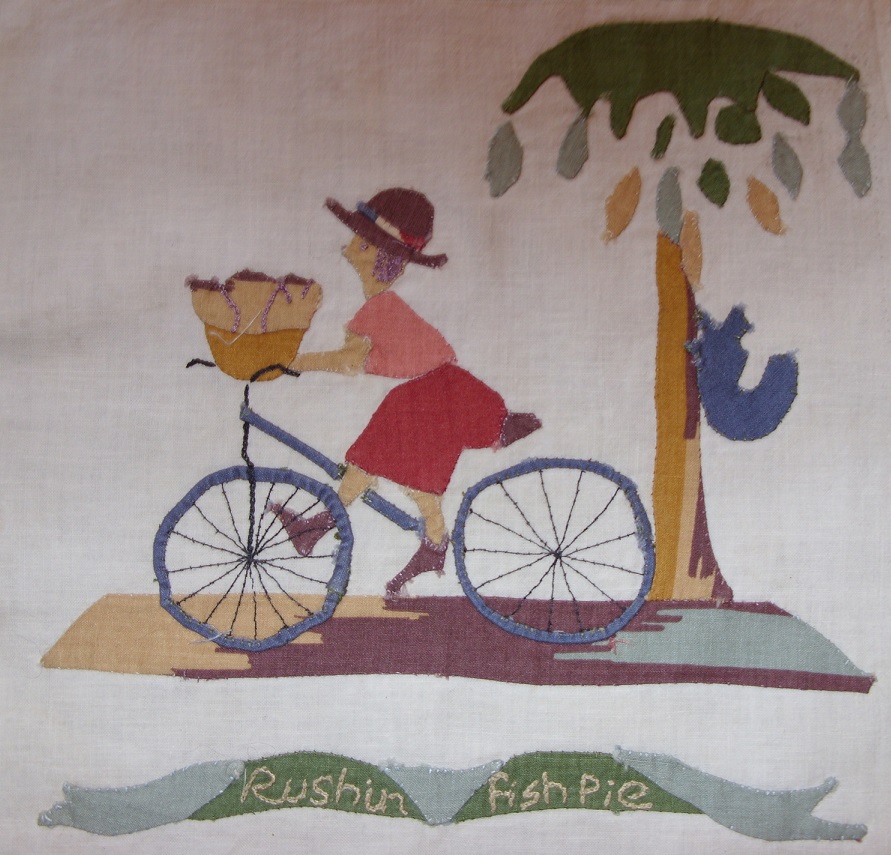
The second, faced with living on a building site developed obsessional cleaning instincts and domestic virtues that manifested before she was ten, binging home the bacon for Thursday night suppers on her bicycle after ‘cookery’. She created order where none seemed to exist. Her sister, immune to labour, simply disappeared into a caravan where she painted her nails and revised for examinations in which she was determine to excel, and if possible exceed. Her fierce competitive instincts were equal to anything, from scrabble to chemistry. It took her no time to persuade her father that her academic record would be much assisted by boarding away, away from the cold tap and the portaloo amidst the nettles. He obliged with alacrity. My vow needed pruning. Neither was like me, nor sought what I understood.
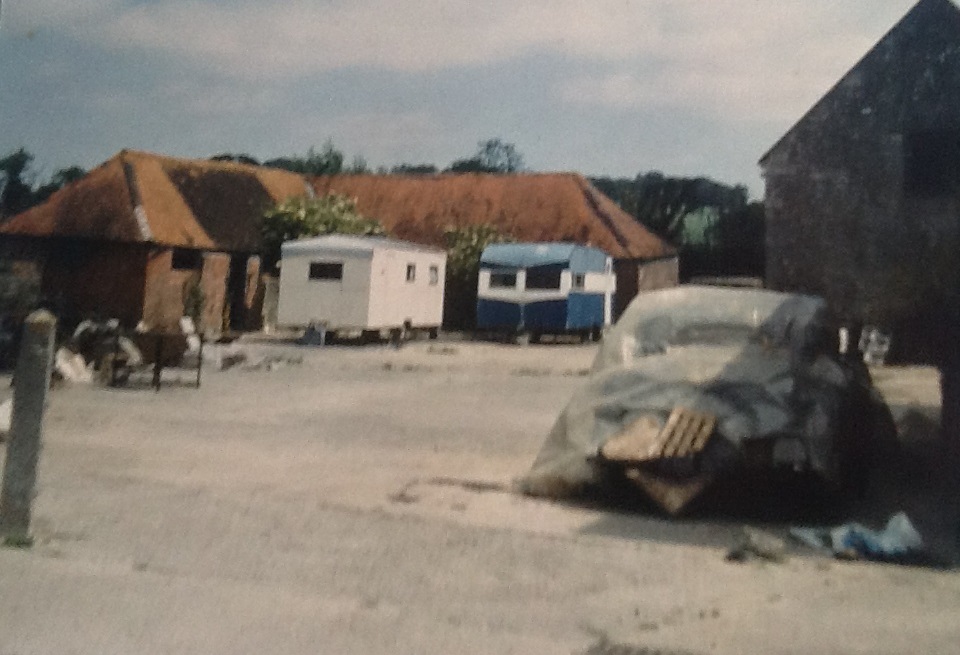
With both the vow was inappropriate. That is the hell of motherhood, you only have one to sample from, and without siblings you start completely un-apprenticed, learning only from sometimes serious mistakes. My mother was not ‘typical’. No mother is. She had taught me by default; I had been peripheral to her life, my children would be central and know always that they were. Pendulums are never a reliable pointer, but the circularity of existence is invariably reduced to the swing between extremes.
My oldest daughters did not want to know anything about me, but I had set a course of candour (hatched from my childhood of silence) and took much too long to realise its penalties. I lost both of them; not immediately, but later, when all that candour backfired and I was so very clear as target. Their father stripped me of them utterly, knowing how central they had been in every aspect of creative life. He waited until late adolescence with all its insecurity and resentment made them vulnerable to persuasion. His revenge was served very cold, and wrapped with foreign travel and few returns.
They left, one for university in Africa, the other for training college in Switzerland and never looked back. I had served my purpose, with all the tedium of schooling, housing, homework and transport. Holidays had been treats with him, in exotic surroundings like Costa Rica, Kalahari or Galapagos. Half of my family were always severed from the other half, by money and partisan affection. While the older two were camping on beaches, or on film locations the second family stayed home and played with the dog or tolerated a Yucca plant as perennial pricking wicket.
Overwhelmed by labour and literally putting a roof over heads I failed to see this divide widening. The experience which had set in train both my divorce from him and the book took many years to develop its consequences, to alienate my children from me and from each other. I had complimented myself on a successful and benign divorce, (he and his new wife stayed with us occasionally) but instead merely provided labour and education, enabling him and his wife to live well under canvas, or in remote places without available schools, until his daughters were old enough to leave me without proving an imposition.
Self deception took a long detour, through illusion and dogged determination, but even this provided its salutary lesson; that one daimon (mine to foster unity) is powerless against another that preferred disunity, and could exploit every argument to make its case. The devil has all the best tunes, for sure.
But I had been offered a second chance ( to be continued).
Virtual Museum
You - philosophical, thoughtful, witty. Me - still thinks fart jokes are funny. We should DEFINITELY get together!
How did we get to where we are, do we want to be there and where are we going?
Writing & Publishing, e-Books & Book Marketing
Poetry becomes life when you write it down for the world.
Blog magazine for lovers of health, food, books, music, humour and life in general
Essays Exploring Craft and the Writing Life
Writing, the Universe and whatever occurs to me
WordPress & Blogging tips, flash fiction, photography and lots more!
Notes on a secret garden
A dose of fetish. Good friends. An incomparable muse.
Writer, Poet, Impudent Philosopher: (Pulling the gold thread from the grey weave.)
To the Self within Personality
Defending the planet from bad science fiction
Adventures and mishaps in science fiction, fantasy, and mystery
I write books--cuz I love words. Sometimes they love me back.
"El Mundo Visible es Sólo un Pretexto" / "The Visible World is Just a Pretext".-
Art, Design, Theatre, Literature, History, Food, Laughter ... but mostly Art!
Musings
Wherever I lay my pen, that's my home
Life is make believe, fantasy given form
LIFE FOCUS :: Stay Hungry -- SITE FOCUS :: Reading, Writing, Roaming and the Experiences that come with. (Tips, Tools, Thoughts, and Stories)
Expanding Human Consciousness
When words become unclear, I shall focus with photographs. When images become inadequate, I shall be content with silence. - Ansel Adams


 INVOLUTION: Science and God: Reality Redefined