Story of the Week- this week! Reposted because… Find it here and take like a biscuit on the side.
Nuisance Value is a story that you may think is my own swan song. Or more likely a self-description. It has, rather wonderfully, been selected as a finalist for Magazine’s Spring Story Competition. It is my rather tongue-in-cheek exposure of the heartlessness of petty local government when it has an agenda for which rather poor people are simply in the way, but in this case they win, though rather poignantly.
Sole and Soul Comfort for the heroes of Nuisance Value
It dogs the heels of its companion ‘Blerrie Fockin Beautifulwhich TODAY has been selected as on of the five top stories of the year (2013-2014) and will be published by Narrative as an audio (read by yours truly with full-throated tobacco effects hopefully edited out!) Watch this space for links in due course.
‘Lethargy, that toothless crone Skims perpetual indifference From the cream of richer care…’ (From A Shadow in Yucatan)
When I want to know what I think or feel I write a poem. It’s my personal pendulum. It takes five minutes and then I sit down with the inescapable and try to decide what should be done. The poem that follows is far from my best, neither subtle nor ambivalent. But this post is to reveal the multi-dimensions of the creative process and what feeds in. I intend to un-peel without editing, corrections or censorship. The Editor within will be ignored. She has never done me any good. I am determining my future so be forgiving, please. We’ll start with the conversation with my subconscious- never able to obfuscate…
Coming to Terms -(You have only yourself to blame)
‘It is the latest newest insight
You dream your own existence,
You shape your everyday,
No fault accrues to others
For your malignancy.’
‘Until yesterday I harboured hope
Hope would soon deliver
Hope would celebrate
I had but to stand ready to catch
The flowered coronet
The leap to opportunity
The harnessing of stallions
The flying mares of surf
Last night I gently smothered hope
Blocked her future breathing
Closed her eyes with copper coin; Removed
From her hand, the close-clutched quill
Laid belief in a bassinet.’
‘Of indifference you’d forged a Charter
Of rejection a lipsticked rent
You defied all attempts to trim the sails
Of time or confidence. Took life
Like a bull at gate.’
‘Am I just tired of bruising encounter
The shrug and politesse?
Exchange paid up, or forward
In tips or lists or kisses
The ‘likes’ bestowed on pages
Suffice to keep us moving
The cliff face of despairing
Steepens with every step.’
‘You have smacked hard against the reckoning;
That walking itself is the journey,
Loneliness never diminished
By singing in a chorus
Or beating a common drum.’
‘I don’t remember choosing
The noose of solitude, or
Ideas above my station, or
A love affair with words.
I accepted your single servitude
To fashion gifts in kind.
I have wrung out a new philosophy
(Mostly saline soaked)
Scratched graffiti on the sidings
When wit offered me a wink
Impromptu painted posters
(Vivid, dripping wet…)
Nobody is listening’
‘What made you think they would?’
Strand One. Pretty close to despair.
Brief context:
I acknowledge that I came at the self publishing world backwards; no platform, no fellowship, no facility with IT, no community, nor a group of colleagues, a lifelong solitary so very few friends. The main book I felt was important ( Involution-An Odyssey) was the longest autobiography ever written. It began on the Serengeti plains circa 3 million years ago ( if not earlier) and ended with what the Russians were doing the day before yesterday. Yes also acknowledged as mad. (See Chris Graham’s kind guested post ‘Are You Mad?’)
The Authorpreneur. If anyone can come up with a less attractive concept or word I’d be glad to hear it.
Since then two years have been spent in catch up, site designed, blogging nearly consistent, daily hour or more reading others and commenting, I have been interviewed written articles and been the subject of a generous near obituary byBrian George. A lesser book published ( to offer a small easier introduction) and a loyal and warm community of ? six or eight followers that consistently help retweet and comment. There are (apparently) over 800 ‘followers’ and less than a handful leave their avatars when (or if) they darken the door. I am not whinging, it is clear that (as the poem declared ab initio) it is MY FAULT. I just am laying down the ingedients.
I have cast about for diversions ( short stories, and interviews) to get away from me and my bleedin books and if anything readers are falling away. It is clear I am failing at greater velocity. I gave it a last shove by letting a professional enthusiast SEO my site, and today I got a tweet from a psychotherapist ‘Not very modest is it?’ Well I have been modest for forty five years. I have never publicised the plagiarist who savaged the first draft but went on to write something pretty similar four years later and land the Templeton Prize (A nice clean million). Nor rebuked the esteemed Fellow of All Souls who asked for a priority sight of the manuscript ‘in hard copy’ and four months and fifty pounds later said ‘unfortunately I will not have time to read your work’. Modesty has been a ill serving wench.
I am reviewing my situation… I cannot pretend to have content except books. I cannot write books if all I am doing is loud-hailing. Nor can I return to writing books that I now know for certain will not be read ( unless I go on to devise other CONTENT- grammar tips, or recipes about which I know niente) That was why an interview with Viv Tuffnell expressed everything I wanted to say too. I hoped that would start a conversation, but it seems to be a conversation nobody wants to have for fear of suggesting failure. We must all pretend success, and success will come sidling in. To me success would be twenty readers a month, no, make that ten.
If Involution had not had pretty outstanding reviews by notable people, similarly from recognised professionals, charmed the few readers who have opened it on Amazon I would just have to shrug and accept it was no bleedin good. Or that it might be fairly good but is wrong for the age of Twitterati. Much the same holds true of the slimmer volume of Yucatan. Both have won prizes, so I may be a literary Okay writer that was never read.
So here’s the thing. Do I give up? Only readers validate the reason to write ( once the autobiography is out of the way- mine was the biography of every reader as well)? What remains? The daily Facebook update, the pointing finger, or a savage satire for Television on speed dating only the already married ( married to their own books natch), the self congratulatory world of Indie publishing where writers talk to other writers about how competitive our ‘products’ are.
I recently reviewed an outstanding book by Melissa Studdardentitled I Ate the Cosmos For Breakfast. She might just have saved my bacon because today she posted a poetry challenge called Changing Form, but which she suggested using a form used for other purposes to shape a poem so here is my recipe to book end a minor crisis of confidence.
Recipe for Social Media Etiquette
Firstly finely chop Content: Useful, Practical,
Sprinkle through sieve of sparse allocation
Arrange on a plate of snack separation
Drizzle with images, comic cut humour
Offer on frequent toasted smiling
Sweep links un-used to the composting bin.
Meanwhile…
Plan for the long haul picnic parade
Dress in cream whipped with the personal
Withdraw the moment a critic waves caution
Let irrelevance trail sweet bait to the books
Be spare with the chilli sharp word or the cynic
Bland is now new gourmet black
Take time to build a kissing collection
Distract with bullet list, opinion, new chatter
Answer agreement with approved thoughtfulness.
Post snapshots taken to seem spontaneous,
Keep drowning but never ever stop waving
Mostly keep on writing books.
Tired? You say. Well that is expected
The Marathon never was for the faint hearted
If you don’t believe enough to press forward
Why should we care in the deluge of options?
Shout softly, all obvious selling is vulgar
The trick is to camouflage, deceive in the dressing
The only game is skilled pretense.
An Editor flags with bright grammar ‘pointers…’
Novels peak out from the ‘how better’ guides
Runners are hooked with ‘let me help’ contracts
I’ll host your party, just relax.
Take a course, revitalize, pay in installments
We’ll get you there. Just keep the faith.
The Market is changing, it’s fish or it’s vegan,
Haiku or novella; the six word portrait
All serial books, (or post-its instead),
Less is more, the long form is passé
Help hopefuls re-shape, retreat and re-edit,
Ambition has a limitless pocket
Feast on almost certain failures
Above all, master encouragement.
How then cook a Cassoulet steeped in a lifetime?
Serve a fresh salad before it wilts?
Beat up a short story culled from the garden
All stages are set for immaculate timing
The play was billed as ‘Writers Reach Readers’
But all I found was ‘Talking Heads’.
Since I posted this I have had a letter from Narrative Magazine saying that a short story called ‘Nuisance Value’ is their Story of the Week. This was written at a similar point of despair, on behalf of the couple who inspired it. You can find it here. You might enjoy the bittersweet dish served cold! Maybe I’ll just write for myself, and blog for amusement and to hell with preneuring!
Looking for Lucas was a Finalist in the 2014 Rubery Short Story Prize and has been published it their Anthology, just out. I thought it would make a change for all my followers, especially the South Africans amongst you, since I remember things I suspect you are (luckily) too young to have known directly.I hope so anyway, though it will ring with the familiar. I intend to publish short stories this year to reflect the nuanced differences in Old and New World ways of being, doing and thinking. This is the first taste. Opinions welcome!
Parktown Street
Looking for Lucas
The problem of Sou’Thefrica has always been black and white. I’m not talking about skin colour here. I’m talking about reputation. When it was governed by Whites it was labelled as black as sin; after Mandela, when the Blacks got to punch air it was pure as the driven… Nobody realises that it wasn’t ever all black and it sure as hell isn’t all white now.
I should know because I am a Black living in a White skin, an albino with a dusky complexion and krilletjie hair dusted with ash. So I fit nowhere which gives me a unique view on the matter. There was once hope, and in the darkening days hope was oil that lit fires, and kept laughter and penny-whistles alive. That was before I could write, or I couldn’t be telling you this.
Writing was the problem and I should have kept my ambitions under wraps, because ambition got me hooked. That day I swung out, that careless Sunday, Special Branch was there when I came through the gate. It wasn’t until I was walking in full light that I realized a car was cruising…by then it was too late.
‘Hey Kaapse, Kom hierdie. Waar gaan jy?’
No point running. The ‘Kaapse’ tells you why they noticed me. Wrong colour, wrong hair, wrong place. Not that I’m a coloured, but I was neither decently black, nor white enough for that sleeping white suburb. The driver was an ugly brute; the other a jackal grinning like he’d spotted the day’s sport.
‘Waar werk jy?’
‘Ah…ah…ah….’
‘Spitut out. Waar gaan jy?’
‘Mm…mm..mm…’ The driver raised his fist, but the other said ‘Hy’se stammerer. Hy kannie spraak’ and then he said ‘Can you write?’ and I stupidly nodded, so he gave me his note book and said ‘OK, write the answers’
‘Where are you going?’ So I wrote ‘To see mother. Day off’
‘Day off where?’ So I pointed down the road, and jabbed a left turn; lucky they didn’t make me go and show them. I haven’t got a mother.
‘So where do you sleep?’
‘Sss…sss…..Sophiatown’ I couldn’t write Sophiatown.
‘Where’s your pass?’ I patted my shirt to show I did not have a pass. The big nearly got out but the other one asked ‘How old are you?’ So I wrote a ‘14’ like I was really seven. That time they let me go. If I was fourteen I did not need a pass. They drove off, slowly. I was really seventeen but small and stick thin.
In fact the writing was why I was coming out of that gate. I was there for lessons. If you can’t speak then writing is another country. The people who lived there let me sleep in the back room and just being around them taught me other things, like chess and food I never knew existed, olives and those salty fish in a tin, anchovies. They were supposed to be a luxury, but salt you can get anytime.
I’ll tell you about that odd collection because they were like a tuning fork before any music. They showed what life might have been under improvisation; not black, not white, maybe not even special. Just everybody different. Max was just back from USA, an architect. With shaven black hair, his face carved in soap, straight nose, short lip, eyes like raisins, always moving; restless as a constipated cat. Something about him made me suppose he was clever, and boy, he certainly agreed with that. Minette, the only girl in the house used to tease him by beating him at chess. Another thing, he always wore white socks; I’d never seen American socks before.
Minette didn’t always sleep there because she was a student and not supposed to ‘fraternise’ with the lecturers. I never said. They were all from the University. She was nearer my age, maybe eighteen; best of all she liked to kwela on the grass after supper. Somebody once said ‘Honey. What’s in your blood? You dance like you got six toes!’ She laughed, and took my hand to dance again. But I was shy, so she dropped it. Her boyfriend Petrus taught Psychology and I couldn’t take to him. I don’t know why. I remember how he sat, one foot on top of the other, in case it got an idea to walk.
The one who had taken me there and who taught me was Oscar. Now Oscar was the really clever one, with a nose like a bird’s beak, whip thin and fast as a lizard. I had noticed him walking with Lucas down Market Street, the two of them talking in Zulu, and laughing; man I mean really laughing. In those days you never saw a black and a white sharing a joke till laughing smacked a leg. Lucas was as black as a hole in the sky, and he and Oscar were real friends. They opened new doors for each another. Oscar would take Lucas into white clubs and parties dressed as a waiter, or standing in the theatre lobby as his chauffeur in uniform and cap. Lucas had to put on fancy dress; Oscar had to take his trendy clothes off.
In return Lucas took Oscar to Alexandra or ‘Back of the Moon’ the shebeen where Masakela played trumpet. Lucas was doring sharp; he worked as a reporter on Drum Magazine with ears sharper than a nagapie. Overhearing conversations gave him leads on what Chinaman shipped money, where were the latest safe-houses, and who was next. Drum was everyman’s latrine bible, always raided, always moving on, bio-degradable in every lean-to stench-house.
The Other Place
I never knew what Oscar was after. He fooled around, making things. His Zulu was home-farm Zulu, not learnt out of books. Put him behind a wall and you couldn’t tell he was white. Often he pretended deafness so as to catch black insults and black jokes like spiny cat-fish. Oscar and Lucas were one handy duo in those times, when whites and blacks were camped on opposite koppies waiting for a signal to start Blood River again. Chances to meet were street chances. That’s when I made my best move, and stopped those friends and asked if they could teach me to write.
‘Better come with us now’ they said. So I did. Me in the back, they drove to this house in Parktown, about as swank an area as Jo’burg sported. Only their house was an old tin-roofed box behind a high hedge. Probably built by a mining speculator who kept his half-cast kids out of sight; but now squashed between mansions with lawn sprinklers. It was my first home; maybe why those days still seem mostly sunshine. There were other reasons for sunshine, though.
Until I was forced to spoil it.
We knew the house was bugged, because Max had come from MIT which made him suspect. It wasn’t because of Lucas. Nobody knew about him. He crawled through the hedge over the neighbour’s compost-heap, a deaf-mute in the house, speaking only in the garden. I ran errands, even going to the swank Zoo Restaurant for wine when they ran out. They gave me money; the cook pocketed it, and wine was dumped in paper bags behind the rubbish bins. I can remember the cries of the monkeys and the hyenas trotting behind the wire while I waited for the lights to go out, so I could make it through the trees back onto the road. In its way that laughing house was an oasis in the desert of waiting. For what?
Zoo Lake
Oscar gave me lessons, and Lucas made me copy his reports, in case he was nabbed. After he reached the Editor’s office he would pay-phone three rings and then hang up. If he didn’t ring I was to take the copy myself. I only had to do it once, when he was held in Marshall Street for three days. Then he published photographs of his bunged up eyes which just made Special Branch more determined. A Pass infringement wasn’t enough. So they gave him enough rope and waited. For that reason Lucas never stayed over-night, just came for a bath, friendship and food.
Then I was caught again by the same two heavies.
‘Ok Kleurling. Game’s up. You still writing?’ They had me forced against the car, one with his knee in my balls. ‘Here’s what you do. If we let you stay, you write the names of everybody you see coming and going; times, dates…you put it everyday, under this stone. Leave any name off, and you are first for a big-time charge. No trial, no Judge, yus forever in Chook, OK?’. He pushed a notebook down my shirt front.
‘No excuses now. Who’s in the servant’s rooms?’
‘Nn…nn…nobody’
‘Yus! these whites do their own cleaning? In Parktown?’
‘Sometimes they can get help, not always’ I nodded.
As I left one kicked the back of my knee. ‘Jus our signature’ he said.
So I looked on books for new names. Mr Corbusier, Mr S. Freud, Frank Lloyd Wright, even Charles Darwin honoured us with visits and disappeared back into a library where they’d never be found. Instead they were now transferred to a priority list in Special Branch waiting to charge them. I knew it couldn’t last.
In the end the rope that nearly hanged Lucas was a US Scholarship, and some boaster published the news. Then he was really on the run. Special Branch raided Drum, and every reporter on it. Lucas tried to get to Durban to jump ship but every road was ringed, so he came back. We had to hide him until friends in Botswana could figure a way out. Oscar spoke only in Zulu on the telephone and trusted any interpreter to scramble it. Zulu was a forked tongue, the snake would bite.
They came during supper. We saw the torches coming through the gate. Oscar grabbed my hand and dragged me out the back, after saying to Minette ‘Delay as long as possible’ We ran across the dark yard to the servant rooms where Lucas was asleep. Oscar slapped him awake. ‘Get up, put on this apron’ He had unhooked a white apron from the kitchen door. ‘Get under that blanket and be unconscious’ he said to me, ‘lock behind us.’
So I wasn’t there to see the finale. I was under a sweaty blanket, shivering, until Special Branch splintered the door, and dragged me out.
‘Fock you Kleurling. You supposed to be on duty…’
They slammed me back against the wall and left swearing.
When I returned to the kitchen Lucas was quietly washing up, in the apron that covered his wide-boy cleverness and floured him to stupid servant. They never even noticed him. That night the summons from Botswana came.
Before going, Lucas woke Minette before the sun.
‘Come for a walk’ he said. ‘Let’s celebrate.’
They were crawling through the hedge when he saw me watching.
‘You’d better come too, you neither fish nor fowl…’
So the three of us walked through the sleeping streets; even dogs stayed quiet. We walked round Zoo Lake and sat on the ‘Whites Only’ bench. I remember Lucas writing with a stick in the water, a farewell to the fish. Just before we returned to the house he says to Minette
‘Do me a favour? Just sit with me on the pavement awhile…’
It seemed mad; a white with that very black in full view; and me, a useless lookout.
‘What for?’ asks Minette.
‘Because if I ever come back I won’t be able to do this. Never. When you are under sacking in Sophiatown you’ll do this everyday. Me, I will have pressed trousers, a clean handkerchief, a prisoner of a grand house…So, Madame, I grant you the freedom of the gutter, share with me my last chance to enjoy it…’
He’s not returned yet, even though he could now. Somehow I can’t see it. The country of compromise is now like every other, only shades of grey.
“A few recent posts have been devoted to a collective wail about the impossibility of non-genre books ever being discovered in the goose step parade of all the others who polish their boots and take steps in synchrony with guidelines and expectations.”
But the story of this conversation goes back to January 5th on Vivienne Tuffnell’s blog, Zen and The Art of Tightrope Walking, and the post, The Loss of Joy. Here are a few brief excerpts:
“Did blogging drive away my joy in writing?”
“No, I think it started to go around the same time I began to explore the possibility of publishing.”
Then, she speaks of being “…drained by the demands from all…
The Egotism of Expertise. Sampling the luscious fruits of Self-Esteem
A few recent posts have been devoted to a collective wail about the impossibility of non-genre books ever being discovered in the goose step parade of all the others who polish their boots and take steps in synchrony with guidelines and expectations.
A sharp interruption from an unbelievably perceptive reader who posted a review of both my books and how they interconnected both in time and causally rather answered the wail of despair. He said…
‘all events are simultaneous, and the future can easily reach back to the present—which is, in any case, far longer than we would guess. In 1969, an Eye blinks above a beach on the southernmost tip of Florida; some 45 years later there is a book called Involution. Cues wait only to be understood as such. Our hearts must be open, and our ears must be gigantic’.
These ‘gigantic ears’ for connections have mitigated my misery, and I am jubilant that ONE reader is enough. I knew that; but feared never to discover him. Yet this post (planned for today) still has relevance. It moves from the collective tramp to the individual stamp and an examination of what limits any individual if tethered to any ‘authority’ -his own or that assigned to an institution. In short it is about ‘interiorised’ conformity.
It is a central plank of what all my work seeks to topple: Conformity being deadly to the spirit.
A commonplace promise to writers of non-fiction who might publish is that it ‘positions’ you as an expert, gives you ‘credibility’, enables you to compete with the other experts (like Tony Blair whose ‘expertise’ the Middle East will live with forever) who then are able to give ‘talks’ for a fortune. That may be true of those to whom life has bowled curved balls and who found ways to catch, deflect or detonate. Having had to think on their stumbling feet, they usually bring something new to the table; their creative management of life.
Not so those who amass, bit-by-bit the facts or experiences from which to distil this alleged ‘expertise’, the dogged and methodical, and frequently uninteresting accumulation in some ‘arena’. I call this second grade ‘expertise’. Most especially in the competitive bull ring of academia ( more about that anon) whereby ‘my collection’ ( better distilled than ‘yours’) must trump, through vehemence, debate and prickly defence. This I call the egotism of expertise, and its capacity for jealousy and sustained antipathy runs through the history of science from Plato’s expropriation of Parmenides, through Newton v Leibniz and flows on now with Dawkins and Polkinghorne,Lennox and Dennett, and even turned into a tedious running bet by Sheldrake and Wolpert. Twigs of irrelevance feeding a fire to warm the egotistical.
Why are ideas deemed to ‘belong’ to anybody?
When The world is all enfolded mind…
All speaks to all, as grass when broadcast Appears first in green bubbles where the hedge gives shade, Joined later by struggling drier seed, it makes the sward Full velvet by joining fescue hands. New crystals grown in Montreal create copies in Peru… Once born, existence is assured elsewhere and far away… A dragonfly may initiate monsoon in Kathmandu By struggling in Tennessee to open iridescent wings.
If two people, with the same ‘facts’ available, interpret them differently to draw different conclusions, the facts will not decide, each has its opposing one; belief determines the interpretation, the ‘nose’ or ‘appetite’ for conclusions. I am not referring to experience but why is this factual ‘expertise’ so trumpeted when it answers no questions?
Precluding Experience in Favour of Testable Hypotheses ( the smell of a rose?)
One of the central filters blocking advances in science is the preclusion of any experience that cannot be measured, repeated or validated; which is why so many unsung geniuses went to their graves before their contribution was acknowledged. They experienced what had yet to be substantiated, but egotism dismissed their unorthodoxy; ridiculed until enough accumulation of supportive facts toppled the opposition. By that time their originality had often been expropriated by someone else.
Rosalind Franklin’s contribution to Watson and Crick’s DNA modelling was quietly buried (it is now being acknowledged; she is safely dead). Science, the so-called objective, rational pursuit of truth, is pretty untruthful when egotism is given its head, and in Oxbridge circles it is accepted as the game. Supervisors publish students’ work, and take the plaudits and the prizes.
I have many stories to tell because I never derived an idea. It derived me. Unfortunately it did not ensure letters after my name first, so there was never any moderation to contempt. The experience described in my interview (with Alexander Zoltai) came uninvited, and destroyed my world. So I can hardly claim ‘expertise’, although if I now have a field of ‘expertise’ it lay in the study of those similarly afflicted, with an idea too big for boots’ conformity and without the necessary credentials to argue their idea or even the right to hold it. They were the beads strung on the rosary of science.
Galileo Facing the Roman Inquisition- Banti
There is a glorious disparity, The paradox whereby the caravan Was led by travellers, uniquely unafraid To find established emperors had no clothes. They dragged all cheering, jeering men behind To gather up and measure what fell short Below the turning spokes; securing paltry spoils Of disputation and the fashioning of hats From small distinctions, narrow ribbons of reward, Proving them mistaken, finding brighter claim… (Perfecting with triumphant diadem What was, in general, adequate au fond)
Dipping a toe in the shark infested waters?
In a previous post on symphonic prose I attempted to explain the principal reason behind using it, the appeal to the intuitive heart rather than the didactic left brain. My encounters with the ‘jeering men’ had played a part certainly, not by inculcating fear but the recognition that egotistic intellect precludes understanding of anything meaningful. That certainly came first, and of it I have woven a whole hypothesis about the separation of intellect from consciousness. Science has arrived at objective ‘materialism’ through intellect, and divisive intellect alone.
But ‘for the avoidance of doubt’ I would also say that the Involution ‘played’ its tunes on the harp strings in my mind. Unlike logically argued prose, which demands chronological structure ( of language itself- grammar is ‘frog marched by time’) this ‘playing’ was multidimensional; I could listen to the strands by heeding them individually. In that sense I think Involution wrote itself ‘through’ me. I do not mean to suggest I was ‘channelling’, or that like Mohammed I had Gabriel on side. It wasn’t quite that easy. Rather that, having experienced the ‘all’ was rather like removing a central stone of a beaver’s dam in a fast flowing river, the sticks carefully intertwined were loosened, and in the flow catapulted into the current of understanding. Everything flowed towards the sea.
Jumping in to Deeper Flowing Waters
Having tried six variants of ordinary prose this sense of being pulled by the current was incredibly liberating; I just let it take me where it listeth. This has some penalties, inasmuch as when you claim to be writing science, nobody wants the irrelevant. Tight argument is usually expected. Censoring the river was not an option. It took bye-ways and flowed into small cul-de-sacs, and spiralled in eddies, and slowed with sluggish intervals. It seemed arrogant to imagine I could select from the weight of water which rivulets I would allow or prohibit.
Besides, this was a journey and I wanted a reader (if I ever found one) to take it with me and to feel the coldness, the pull, and a sense of destination, not a contrived subterfuge to camouflage a polemic. The reader who was mentioned above, seems to have jumped in and let it flow round him, and what he heard was multi-instrumental music. Was ever ‘symphonic prose’ better rewarded? Although I believe that Involution as a hypothesis does sing a better song about creation, (and has much evidence to support it), I am phobic about proselytization, or evangelical certainty. As a theory it will be refined, because its story is all about hypotheses replaced by bigger and better ones, but the first journey into unknown land is always the most vivid.
Behind us will come other minds Recasting all in oak… Filling its gaps with detailed plate A stanchion bridge to stand. I do enjoin you, just enjoy The flowing river below… The sway, the pendulum that swings… You will not lose sight of land Nor yet the constant sight of sea Reminding you of Turner’s brush, it seems to come and go…
Goya- Scene from an Inquisition
The Meaningless Didactic: Avoiding Bruises.
But there was another reason, to write for those who did not call themselves ‘seekers’ or ‘scientists’. That decision had been born with bruises I touched on in previous posts, particularly my encounter with the evangelical Epiphany Philosophers in Cambridge, who cheerfully tore it (and me) to shreds. They straddled the ‘spiritual /scientific divide’ but with the waspish competitive ruthlessness of academia. I had been through something close to hell, had to borrow the train fare to accept their invitation to present the theory, but nothing moderated their savage mockery. I sat at the focal point of an oval inquisition, and bloodied to silence, could scarcely rise when it was done.
Intellectual cut-and-thrust and demolition is the nature of such expertise.
That brings me to the essence of this post, the egotism of expertise, the blinkered and narrow lenses through which all those who deem themselves knowledgeable preclude new ideas, require credentials they respect (Oxbridge or Ivy League natch) before they heed reluctantly, if at all.
The Wrong Kinds of Consistency?
Involution as a thesis traces this very process through recorded history, and how the maverick emissaries of genius (on which all of scientific progress has rested) all shared the symptoms of certainty and obsessive stubborn adherence, yet even that consistency never budged the refusal to the new. ( Brave new ideas are sensitive/To antigen attack from the body politic).Which was why Arthur Koestler warned me that although Involution was worth expanding, it would be unlikely to find a publisher. That was in 1970.
In 2013 it still could not find a publisher. Not even with a letter of Introduction from Laszlo to his own publisher. A notable academic Director for a spiritual organisation refused initially to even accept a copy. His reason? That I had taken the ‘shameful liberty’ of claiming that Koestler had supported it.’ My dear girl, if that was true it would have been published. People say kind things in letters they will not stand up to say in public’ ( He knew nothing about my encounter with Koestler, but assumed because I was unknown, I could be dismissed with unfounded accusations and contempt. I was ‘shamefully inventing’ what Koestler was not alive to deny!)
The planet has been almost destroyed by expertise, over-populated, deforested, over-heated and at war. God save us from too much respect for expertise, expropriation of ideas, exclusive paths to truth, either religious or scientific.
Now, vehemence spent, I promise to shut up!
(Images reproduced under Wikimedia Commons Licences)
Following the Author’s Guild Debate between Joe Konrath and Matthew Yglesias against Scott Turow and Franklin Foer on how much of a friend Amazon was to writers this post would seem timely:
A Writer Redefines the Gulf. (Biographically)
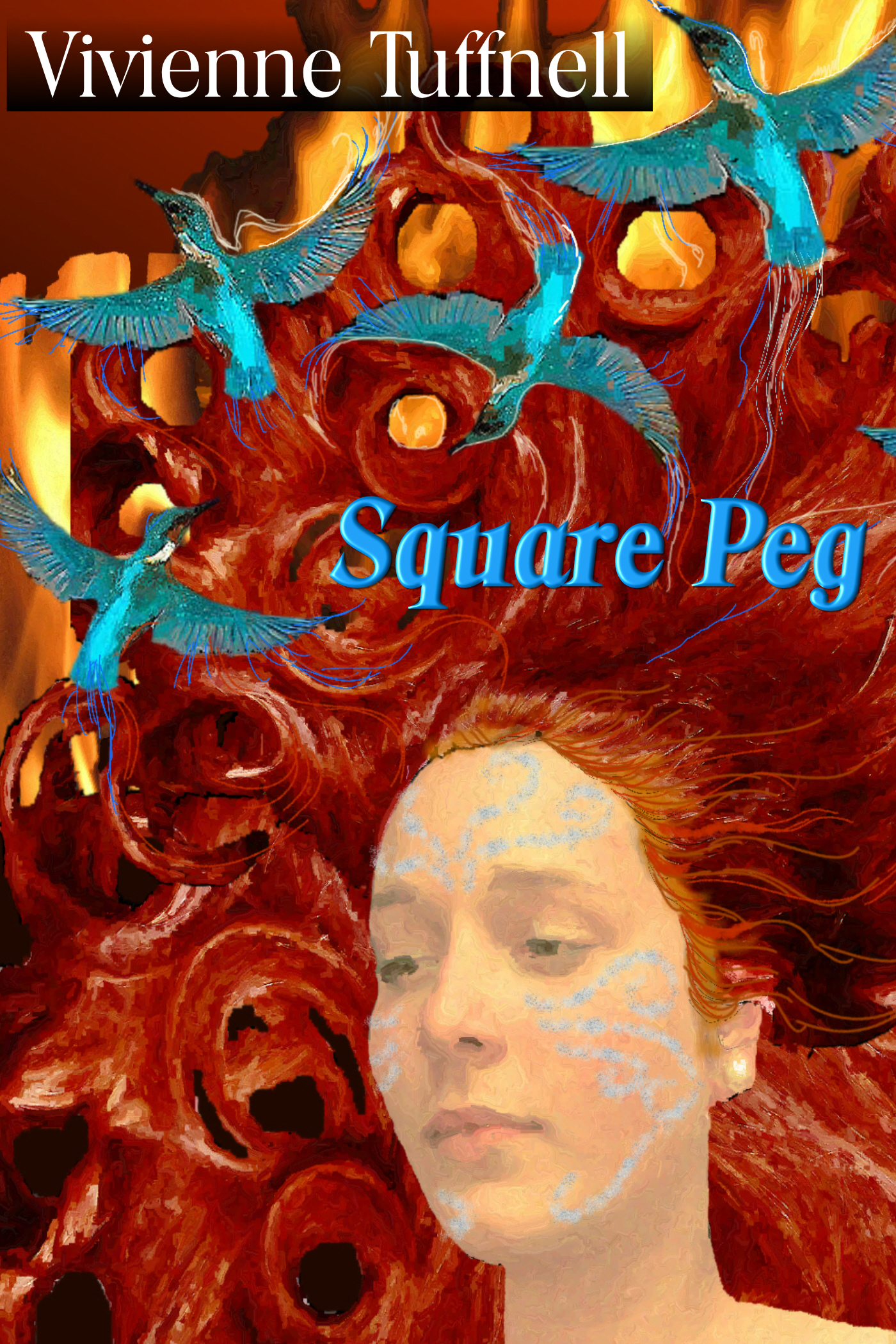
Interview with somewhat dispirited author, Vivienne Tuffnell ( Author of The Bet, Square Peg, Accidental Emeralds, Strangers and Pilgrims, Away with the Fairies and The Wild Hunt and other short stories;)
This interview was stimulated by Vivienne Tuffnell’s recent posts. The Loss of the Joy expressed her recent (and perhaps current) despair and traced its origins to the act of publishing. Following the publishing betrayal by someone she believed would help, and through the necessity of shouldering all the marketing speak, as well as its underlying (and mostly unquestioned) precepts she seems to have reached a psychological ‘Road Closed Pending Repairs’ sign.
Gems Disappearing. The Black and White of Liberty (image Viv Tuffnell)
Deeper than Exhaustion: Defining what a free-for-all does to the ‘Original.’
It lies much deeper than exhaustion. The loss of belief she sums up as ‘the culture itself has been subtly damaged over the years so that commerce rather than creativity is the gold standard of what is of worth to us’
At my last count this post had had about 25 comments of empathy from fellow writers. Spurred by that huge response I suggested exploring the issues from the experiences of one individual, her hopes, beliefs and experiences, and disillusionment. What may be done?
On the basis of what that indicates this interview was structured, if only to recover her memory of the joy she once had, and perhaps to harness the growing community of fellow writers dispirited by that ‘gold standard’ of commerce and the sense that if you are not commercially successful, you must be irrelevant (or conceited!) or unwilling to work, or to shout.
Viv, Can you recall what first stimulated your writing? The circumstances, but also the nature of the impulse? In short, why write? When did it begin?
Back in the late 60s and into the 70s my father travelled to America on numerous occasions for work. I have no idea how long he was away as time is very different for a small child, but his return was always accompanied by gifts of things that seemed alien and exciting. Britain as I grew up was not that far removed from rationing so America and all it contained seemed exotic and advanced. He usually brought back Superman comics (wish we’d kept them!) and he also discovered Star Trek before it arrived on British television. My brother and I used to play Superman games and one of the things about Clark Kent was that he was a journalist and he wrote. Dad foolishly allowed me to use his typewriter, and though at this stage I could neither read nor write, I used to bash away at the keys in the belief that somehow the story I had in my head would appear on the page. I think I saw that the power of words was as much a superpower as the power of flight.
My brother, who is three years older than me, was a writer by the time he started school. We’ve always had a difficult relationship but as a small child I worshipped him. So in some way it was inevitable that I too would write. I wrote some poetry at school and used to make up stories during play. I began writing what would now be termed fan fiction of my favourite sci-fi writer, Hugh Walters, and it turned into my first novel, begun when I was ten and finished when I was eleven. I destroyed it aged fourteen, setting fire to it in an upturned bin lid.
Did you believe in a unique vision or ‘take’ ‘mission’ or ‘belief’ that you wanted to convey. Can you define what that was?
At that time, no. As much as anything, I wanted to write what I wanted to read. By the time I was about fourteen I had resolved that I would be a writer. I asked a teacher I trusted to read a novel I’d written and after a few weeks, he asked to see me to talk to me about it. I won’t go into great detail but the talk we had changed me completely as a writer. He said, “I don’t see you as a writer of detective fiction or mysteries. You’re capable of something a lot more. There’s something else for you, but I don’t know what.”
While some might be offended about his dismissing of a whole genre in that way, I did and do see his point. The immediate effect of his words was for me to open up to exploring a greater variety of literature. Long term, it contributed to a growing feeling of having a kind of a destiny. I know it sounds corny but it did. The intervening years refined this feeling and though I fought hard to try and get books accepted by mainstream publishers, I was thwarted. I came very close to a contract several times and even had an agent. But then it always fell apart at the last. The decision to self publish came hard to me. I’d had definite ideas of who I was and I confess that like many, I had conflated the concept of self-publishing with that of the old model of vanity publishing.
Discovering Path and Purpose.
The blog itself came out of a six week sabbatical from my normal activities, late in 2008, where I withdrew from all my previous online activities and spent much time in thought, meditation and prayer. I needed a change in direction; I felt I’d got lost and had wandered away from my path. I’d been bashing my head against publishers’ walls and it was driving me to despair. So I began to blog and in doing so, a new world opened up. It was via someone I met through blogging that I first began the process of publishing a book. Though the book is good, the association didn’t end well. With hindsight, for me the realisation that I’d made a terrible mistake came when my associate said in passing about the book being ‘just a product’. This was entirely counter to all our previous conversations, and was the first pebble in a landslide that almost destroyed me.
Now, though, I can see that it liberated me. It woke me up to the forgotten feeling and belief in a form of destiny, and that what I wrote did not fit into being mere products. Yes, they are entertaining and can be read solely for that, but there is much more below the surface.
I get the impression from your blog that essentially you still believe that your original reasons remain intact. It is the gulf between expressing those truly and creatively and the erosion of the world that values books, or your kind of books. So essentially your despair lies in the so called ‘market’ and in its maelstrom the impossibility of finding readers. Is that the nub of it?
I think it’s a big part of it, for sure.
If it is, would it be fair to suggest that it is the loneliness of being unwilling to compromise? You don’t want to write for the prevailing market. I don’t either, in fact I would not know how to, so is the essence of this problem the very uniqueness you want to write about? Could you define why that is so difficult? Is it simply too much surrounding noise? Or something else?
Over Defined: Repetitive and Safe.
The prevailing market is founded on the very stale essence of what has already sold. It’s thrice chewed, and therefore pap. That’s not to say there’s nothing good or worth reading but the essence of much of it is tired and jaded. Some of the most famous and excellent authors have found that writing the same story over and over again is what their fans clamour for, and if they diverge from a tried and true formula there are howls of protest from readers and publishers alike. Many people who read do so for entertainment (which is fine) and what entertains is rarely challenging. But that awareness of the prevailing tastes seeps into the unconscious and sours the path to the soul-writing. Like beer siphoned through a dirty pipe, it taints the taste.
The world of indie publishing seems to believe it offers limitless liberty. I am far from sure that it is limitless. I get the impression that there are unspoken limits simply in the structures, languages, genres, categories, SEO searches, through which each book has to tunnel. Unless the work conforms to some, if not many, of these it will never surface. Do you have a view on these round holes? And how they exclude you?
The Metamorphoses of Self-publishing: From Grub to thick-skinned Grub?
At the very start, I think indie publishing did have almost endless scope. However, a process of morphic resonance (if I may use the term) took place and it all started to crystallise the old forms of publishing with the same strictures on format, genre, voice, and a focus on being “as good as traditional publishing” because things would need to be meticulously edited and typo-free. It has become bogged down in the details of aping the existing respectable face of publishing. It would take a gargantuan expenditure of energy now to liberate it from this set-in-stone format.
On a personal level, these round holes are inevitable. They’re there because they’re the iceberg-tips of what readers believe they want: more of the same they’ve already enjoyed. Vendors such as Amazon seek to provide a product for customers, so therefore they’ll use the evidence of what has already sold well. To some extent, I’ve not been entirely excluded because some of my work masquerades as close enough to various genres to past muster. This is solely accidental. I’ve never been able to write for a market or I’d probably have managed to break into the publishing business twenty years ago. I don’t believe in giving people what they want; I’d rather give them what they need. The two seldom combine.
Going back to the despair and the prevailing belief that only sales and readers validate the effort of writing ( one needs two hands to clap), and particularly after the first book has proved one can actually write and publish, it strikes me that you are not contented in simply writing a blog ( which clearly does attract a great many readers) so what more do you convey in the creative poetry and fiction that the blog cannot satisfy: ie the Heineken essence?
The Inner Life of a Story
The cathartic process of living a story cannot be done in miniature (unless you are in essence a highly-experienced Zen master or similar.) The process of reading a longer narrative has an effect that shorter works do not. In addition, the inner life of a story, of characters and events is a real thing, that exists in the non-physical realm. The process of accessing this realm is not done lightly or casually but you are led into it by narrative and held there by the power of that realm until released at story’s end.
On a tangential issue: Is that ‘essence’ the intimacy of being truly ‘seen’? I.e. Offering the reader the deepest ‘you’. If so, is the clamour of the competing market actually selling something different; stories for entertainment; plots for diversion; sci-fi for bright ideas and satire for criticism, rather than the perfume of a passing soul? Is the perceived ‘compromise’ of packaging the soul in ways that conform to broader entertainment, a betrayal? I don’t mean to suggest that the ‘soul’ needs to take the reins but that it may not find sex or violence, or the triumph of evil easy to live with. These all seem somewhere required.Does that contribute to the despair do you think?
The Perfume of a Passing Soul
Yes. One of the things my spiritual director sometimes used to say about my writing is that he caught my fragrance from a particular piece. That’s why negative reviews can be excruciating. I’ve not had many, but the first really excoriating one left me in bits (albeit briefly). You sit there whimpering,” but, but, but!” before you realise that you cannot remonstrate. It comes down to this: the reader did not connect and rejected the perfume of that passing soul. It is what it is.
People talk about writers needing to toughen up and grow a thicker skin. All I have done over the last ten years or so (probably a lifetime, really) is lose those skins that are a barrier to real feeling, and to become more sensitive to the passing fragrances around me. It’s why trying to read a book like American Psycho left me physically sick and unwell for days; I caught a stench of death that was like that of a battlefield in summer.
I felt the same about Chesil Beach, which was highly acclaimed. It seemed to take pleasure from eviscerating the characters he’d created; slowly, tortuously.
Ultimately, is writing the way in which we confront out existential loneliness, and are readers who ‘get’ and share that, now the substitutes for lovers? Is the internet an appropriate place in which to find ‘lovers’? Is that incongruity a contributing factor? The privacy of a book store never penetrated lies somewhere in this lament?
Chivalry and Chaste Love: What the Writer Reveals (and seeks)
I believe it is about unity of souls. In a normal life-time before the internet, most of us found very few people with whom we connected deeply and intimately. The impression I have gained is that people often married someone for the sake of marrying, rather than because they were true soul kin. The only time I can think of in history when this need for another form of deep intimacy was talked about was the time of the troubadours, where a form of chivalric and chaste love was very fashionable and was at the core of much art, poetry, mystical and philosophical writing. We live in an era of sexual freedom but we are like children in a sweetie shop and gorge until we sicken. The unity of souls is something entirely other than the unity of bodies, but it’s generally only in sexual relationships that this deep connection has happened.
If that is so, are the methods of self promotion, shouting, endless photographs et al a form of prostitution ‘au fond’. We want to be ‘seen’ for what we are, not what we appear to be? Or for who else is putting their name to our bandwagon?
To paraphrase Isobel, a character in several of my novels, if it is, it probably only counts as manual relief. It’s probably more akin to a profile on a dating site. You put up what you hope is a pleasing image and a tester of your fragrance when you are seeking a soul-mate. It’s a tiny beacon in the darkness. I gather a greater majority of people make new relationships through the internet, more than other methods of connecting with new flames. The kind of sites used varies. Some are intended solely for carnal, short-lived encounters; others are focused more on friendship with the possibility of a deeper relationship.
Solutions?
Finally. Do you have any ideas which might bridge this gulf between the ‘authentic’ and the ‘market’.
I do. But they’re essentially metaphysical at present rather than practical strategies that can easily be summed up in a short manifesto.
Thank you for the candour of this very clarifying Interview Viv. Much to think about for a great many writers, feeling as you do, to a greater or lesser extent. We all deal with it in different ways, some break and some bend. One of the ironies is that as self-published authors we took on the mountain to escape the gatekeepers, only to face different ones down the line! This was exposed in a recent debate about the role of Amazon held by the Author’s Guild in which the vested interests of the commercial giant persuaded the audience that (long-term) Amazon was ‘not the author’s friend’. The winner of that debate ended by addressing Amazon thus “You’re dealing with precious cargo. Don’t abuse your power. Be good stewards of word and thought.”
On Alexander Zoltai’s generous site an interview illuminates the Call that imposed the discipline, and left little choice about the Life. Visit to understand the insanity!
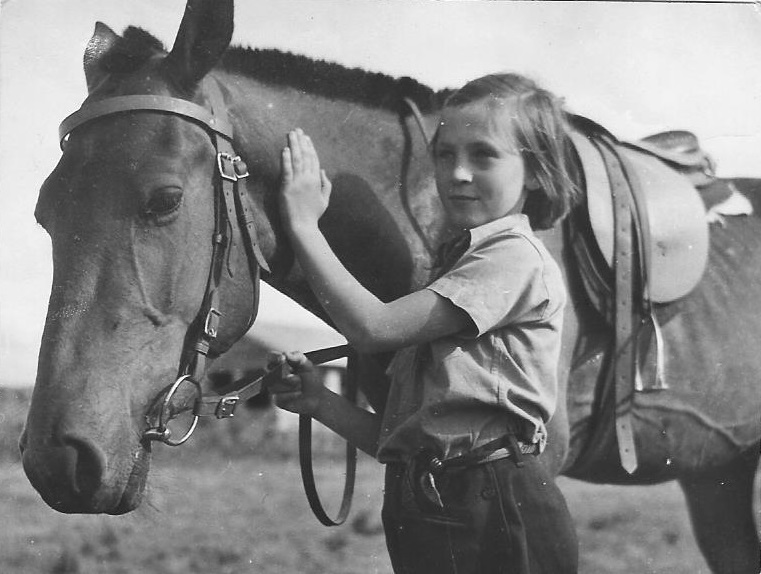
Noel- My Christmas present when I was nine. Saddled and tied to the gate on Xmas morning
At Risk of Repetition but For all new and welcome Visitors to this Book Blog Site Today’s NEWS
Author Philippa Rees Releases ‘Involution – An Odyssey’, An Epic Work That Redefines Reality And Reconciles God And Science –http://ow.ly/Hel0U
Before Wilber, Laszlo, Tolle and Sheldrake, there was ‘Involution’. Rees’ epic work reunites mind with matter, intellect with consciousness and man with God. It ultimately redefines reality.
[Somerset UK, January 13, 2015] Author Philippa Rees has announced the US release of ‘Involution – An Odyssey’. In the traditions of Homer, Dante, and Milton, author Philippa Rees has created a modern-day masterpiece; a work that covers the entire spectrum of consciousness and experience. It is a work that ultimately reconciles God and science.
To communicate her message, she developed a form of ‘symphonic prose’ that bypasses the brain, speaks directly to the heart and creates an experience – one that is beyond a mere reading experience. One cannot understand a symphony by reading the sheet music. One cannot understand the taste of cake by reading a recipe. Direct experience conveys direct knowledge that lies beyond mere words.
Symphonic Prose. (I introduce the unorthodox- but apologise for mentioning Involution).
I know the true poet finds his words In charcoal dreams, a soft-shuffle roundelay That emanates from reflections in pools of solitude, While the tongue licks a pencil, to hear the heart’s pause Seeking the metre to echo, the right line to lead.
Mostly he wraps silence in a paper screw of words That offers the liberty to linger on the grass Where clouds above scud images into personal tastes, Tonguing newly minted thoughts, striped zebra sharp With wintergreen, storm liquorice, or dripping caramel.
What is meant by symphonic prose?
The traditions of poetry imply assiduous attention to every word, the inflections of each line, somehow squeezing the universal from the minimal. The secrets it unwraps are those of the deeps, calling out both admiration and assent. Good poets express what everyone recognises as true, as precious, as both self-evident and revelatory. The poetically appreciative reader gives such meticulous artistry due weight, reads aloud like T.S Eliot, intoning each phrase to pay tribute to profundity, and stop the listener as certainly as a nightingale in a darkling wood. Poetry demands attention, and part of the resistance to it is to that imperious demand that says ‘Stop. Heed me’. Most hurry on, slightly cross, unless they are at a funeral, when they find it apt. Poetry takes its head from silence and the inexpressible.
Wood or Trees? Whole or Parts?
In contrast here is explicit reference to too much ‘artistry’ that kills sympathy.
A similar obsession… In Dürer’s roving and audacious eye, Which served all fillets carefully deboned… He stroked each hair upon a frightened creature… Each wrinkle on a toothless listless hag… The pitiless details of the lucid surface Somehow cauterize the sympathetic heart
It is science’s cauterisation in its ‘pitiless details’ that the symphony of a renewed science seeks to re-calibrate, without any loss of logic or meaning: Mystical language for mystical science. Involution proposes that Mankind has step-by-step recovered the memory encoded through time and stands at the brink of dissolution; mind and matter melting into one another as a single ‘field’ of energy. Although I did not consciously plan to ape Parmenides, his incantatory instructions in his great poem were about the return to the Goddess, in which words were both musical and vehicles of approach to the great Union of Love; an early knowledge of mantra. It might be further evidence of the hypothesis (of return to origins) that Parmenides found me, rather than the other way round.
The Dominating Perception of ‘Po-e-try’: Po faced.
In the last post I set out to talk about Reality and Perception and the ways in which perception both creates and distorts the attempt to bridge the gulf between them. Poetry has a deserved and undeserved reputation, and it is the undeserved that I am up against, the belief that it requires different ways of reading, and demands a sort of reluctant reverence. Why is that? Is it because, unlike logical prose that takes by a collar and leads away, it expects the reader to take the steps without hand holding, and does not even cut the grass across which he might have to walk?
The suggestion from a recent supporter was that I had written symphonic prose, not poetry. He was right. A symphony is more like a tapestry than a painting. It has an underlying structure, warp and weft, and the threads that weave it are to make manifest something else, a picture emerging from elements, both repeated, juxtaposed, modulated; different in different light, richer in certain angles. Pull out any one and disintegration begins. So it is with the warp and weft of consciousness. All needs all; each level of complexity repeats and interweaves. The picture rides above the structure; ’emerges’ from it. That was my hope in writing this way; the scaffolding of science to reveal the cathedral of consciousness. It has no beginning or end. This journey is a wandering at whim and can begin in a crypt or a clerestory.
Not ‘heavy duty’ but material at hand. ( Demolition and Reclamation)
The lines do not demand weighty emphasis, the words ( and indeed the arbitrary subjects selected) chosen were for economy and evocation to throw the rug out wide, not roll it up. They are as easy and logical as prose but without apologies, evidence or persuasion. I wrote a symphonic construction in which each part was there to serve the whole, unimportant except in service to that. I suggested it should be read at an easy canter, and what fell would not matter. You do not stop a symphony because you missed the entry of the bassoon, it will colour anyway and it will augment what you missed on its return. So it is in Involution- an Odyssey. A symphony is a journey through the changes each makes to the all, reshaping silence, to which it returns.
One reviewer really understood its intentions: The reader who finishes the book will not be the same as the one who began it. New ideas will expand the mind but more profoundly, the deep, moving power of the verse will affect the heart. This book was a written pilgrimage…( Marianne Rankin- Alister Hardy Foundation)
Language is linear, but symphonic prose is the closest it can get to music. Contemporary poetry manages the pure tones of single instruments; the brief scales, the short songs: So personal it is unassailable until it finds echoes. Epic poetry takes us on the march of Roman legions; narrative poetry is now almost reviled. You are lyrical or you write epic, and please decide. Might symphonic prose escape and fare a little better? That was the hope. The penalty already lies in the belief that no ‘real’ science can be found within poetic language- again the perception may trump what lies above the structure, it’s the picture ultimately that is important. It proposes a serious and coherent alternative to Evolution’s accidental and competitive precepts which may be missed because the language is evocative and not didactic; the left brain does like to take control. It is provided for (in footnotes) but I’m damned if its shrill caveats and hair splitting deserve any more homage.
Redressing the balance; restoring the wood.
Science has missed the wood of the over-arching canopy which guided those in mental balloons, the geniuses who entered states of union with contemplation, and always returned with the bigger picture, the synthesis, the dissolution of either-or into both-and. As Henri Bergson said ‘The intellect may be compared to a carver, but it has the peculiarity of imagining that the chicken always was the separate pieces into which the carving knife divides it. Science still supposes that consciousness is emitted by the (mainly) human brain. When you give the material so much importance, it is no wonder it bites back, diminishing the field in which we create and are created, to allow sparks across a synapse ( or a few) to give the brain authority rather than understanding its cellular receptivity as a fine tuned radio: as a momentary coherent synchrony that introduces each to the all, and makes each the transmitter of integrated Mind. It is DNA that listens to language and sound,changes its ‘mind’, and its instructions and talks throughout the biosphere. Writers, dancers and musicians express what Neuro scientists are trying to pin down, like the butterfly collections under glass- not only no longer living, but netted in the wrong arena. Instinctively we trust body language, and cells speak louder and instantly, yet belief in the supremacy of brain blinds all inquiry. It is an ‘interpreter’ that’s all.
It is becoming commonplace to hear ‘You create your world- just change your outlook’ but somehow this is seldom levelled at the collective creation of science and its materialism.
The left brain has had the field for too long, this symphonic prose liberty with language was to re-engage the right brain and the heart, reviving the wood, carved heedlessly by the scientific intellect, leaving only desolate bones.
‘Well that’s it. Not here.’ ‘Where next’ Tunnel under Schweitz? ‘Worth a try!’
The anemone of the human brain
Combs through a sea of mind:
The skull as porous as a sponge
To soak ideas from passing tides
The syllables of words or shapes…
Or music scored on silent stave
The needle placed upon the groove
Replays, whenever brain is tuned
To Beethoven’s vibration.
Reality and Perception
What are you waiting for? The water’s lovely!
The ‘Sea of Mind’ Metaphysical Connections.
The impulse to re-focus this blog emerged from reading a book snatched at a Morrison’s checkout- not the sort of book I normally choose, and because it was a present had to be consumed at speed. The book was David Nicholl’s ‘US’, built like an American sandwich, simple ingredients, carefully layered. A deceptively breezy and sometimes deliciously droll account of the ending of a marriage while doing a ‘European Grand Tour’ to educate a bolshy and unsanitary son before he flew the nest (and hopefully patch-plaster the widening cracks).
Superficially light hearted and self deprecating, the profundity lies between the lines. We start to bear witness to the reluctant understanding of the aggrieved and desperate father, Douglas, whose certainty in his moral and practical virtues (and his perplexity that they are never appreciated) becomes the pedantry and dullness his wife longs to escape and his son runs away from at the first opportune excuse.
That led me to this emphasis on perception. All his intentions were laudable, all his stratagems for the sake of his family loving and appropriate. That was what his wife and son could not stand. They were imprisoned by his good intentions, foresight, and all that safety. They wanted to be allowed their chaos, and ill-discipline, wanted to wing it, but he followed maps and itineraries, saving them from themselves. I feel that saving us from ourselves is omnipresent in so many writing guides, programmes, checklists. There may be safety in numbers, but I’m not sure whether there are numbers in safety.
What was important was not what he did, but how it was perceived. There was no bridging this divide, not even atypical heroism on his part. This very funny book was ultimately tragic. No reality changed their perception, once lodged.
Perceptions about Writing.
You can see where I am going with this? The timing of this book chimed with my own necessity to re-think my frustrations. The world of writers and writing is all about perception. Anything that stretches the boundaries beyond the perceived limits (appropriate genres, plausible characters, believable predicaments, even outré sci-fi constructions) are deemed not merely un-commercial but somehow illegitimate, and if too bold, reprehensible. The experiences which might demand new languages, (in my case newly termed by a new reader ‘symphonic prose‘ to escape the perception of po-e-try as ‘difficult’ ‘obscure’, or just hard going- when in fact it makes the story of Western Scientific thought easier), and which could help break down those limited categorisations are fiercely resisted. Considered pretentious, called excessive.
Like all modern minimalism what is de rigeur must be understated, yet write the History of Science in poetry and minimalism is no longer applauded. It seems we occupy those Victorian strip gardens, in which only one unorthodoxy is permitted to visit the out-house at a time, but all button up before coming out. (Perhaps in this unstructured world we feel safer behind bars? Even self imposed ones.)
Self publishing accepts the Challenge- to be as good as the ‘Others.’
Even self published writers who, for the present, strive for recognition by conforming to emphatic exhortation, work within the accepted parameters. They push past the gatekeepers (the traditional publishing strait jackets) but mostly with perfectly edited, professionally covered books to prove the gatekeepers blinkered or myopic. Not fundamentally wrong. The numerous advisers on how to write novels, draft dialogue, plot plots, end chapters with requisite hooks, are basing those injunctions on the standards applied by those they seek to trump. Know your market, establish your platform, work the algorithms are all ways to compete along the known pathways.
When I began, knowing nothing ( I still know very little), I took courses in how to pitch, how to frame a synopsis, how to hook in a bio, and the more of it I did, the more I realised that nothing I wanted to write about would fit any of the assumptions, or answer any of the questions. Precisely because my experiences that underpinned writing were all out of the box too. Way out. An accidental (but unrepentant) square peg. But truth must always be stranger than fiction, so keep truth out.
Not Wrong, but Not Enough.
I am not suggesting these advisers are wrong. They give generously of their knowledge. Those things work. MacDonalds sell a lot of hamburgers too. What I am hoping to do is to question the perceptions that make those established procedures the only acceptable ones. Like Douglas in ‘US’ I have my own rigidity, mainly aesthetic and relating to language itself. I too find adverbs in excess irritating. I also find the implausible remark out of context, or heavy duty exposition as though I cannot be trusted to make connections, enough to abandon. As I would any pub bore by making my excuses. But I read an author whose books are far from copy perfect, have occasional errors, but are riveting in terms of ideas and judging by the five stars he gets on a daily basis many others read him with devotion and pleasure.
He does not need to care. Or simply chooses not to care. I hope one day to achieve his sanguinity; I will never achieve his prolific output. His ideas are far ahead of those prevailing, yet revealed through fictional situations and sympathetic characters. He breaks all the rules about dialogue; introduces philosophy and at some length; writes in multifarious genres, including essays; sails close to sermons and laughs at convention and himself. I suspect he is not a joiner of groups and has not researched his ‘likely readership’ or where they ‘hang out’, or written a pitch perfect letter. I am sure he knows exactly how far out to swim, and still keep a toe hold on a reader’s expectations. I envy his debonair savoir faire. His books will never be blockbusters ( they are too challenging) but alone he is proving the conform police over prescriptive. Most of the books I admire and some I choose to review are of this nature:original, far out, demanding.
Creative Destruction.
I believe in collective creation. What we adhere to becomes stronger: What we cease to respect will incrementally dissolve. Together we can really change the circus; alone we’ll die unknown and un-mourned.
Adventures usually begin by destroying barriers. Mostly those in the mind. I would like to find other writers who feel the same and together we may locate readers who value beasts who push through hedgerows rather than gates. I hope that interviews with a few brave pioneers will illuminate the wires they want to cut, the palisades they’d like to scale. And, if appropriate, how they have? Next post I will attempt to defend the use of symphonic prose, or argue its legitimacy.
If you want to be interviewed for a guest appearance and say what you never have elsewhere, (away from the peril of consequences) feel free to subscribe to this blog or email me (address provided on the right). I can write you an interview or host a let rip, providing it is civil to people. About ideas, and indignations I am open to anything. I have been told I do not exist, ( no footprints in the web sand) so like Harry with his invisibility cloak I have new freedoms. I intend to enjoy them, keep writing, and hope for company.


 Magazine’s Spring Story Competition. It is my rather tongue-in-cheek exposure of the heartlessness of petty local government when it has an agenda for which rather poor people are simply in the way, but in this case they win, though rather poignantly.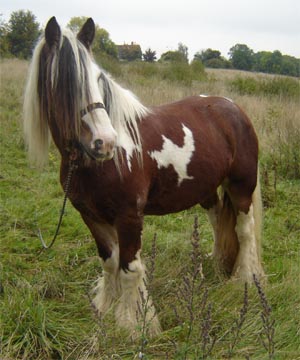


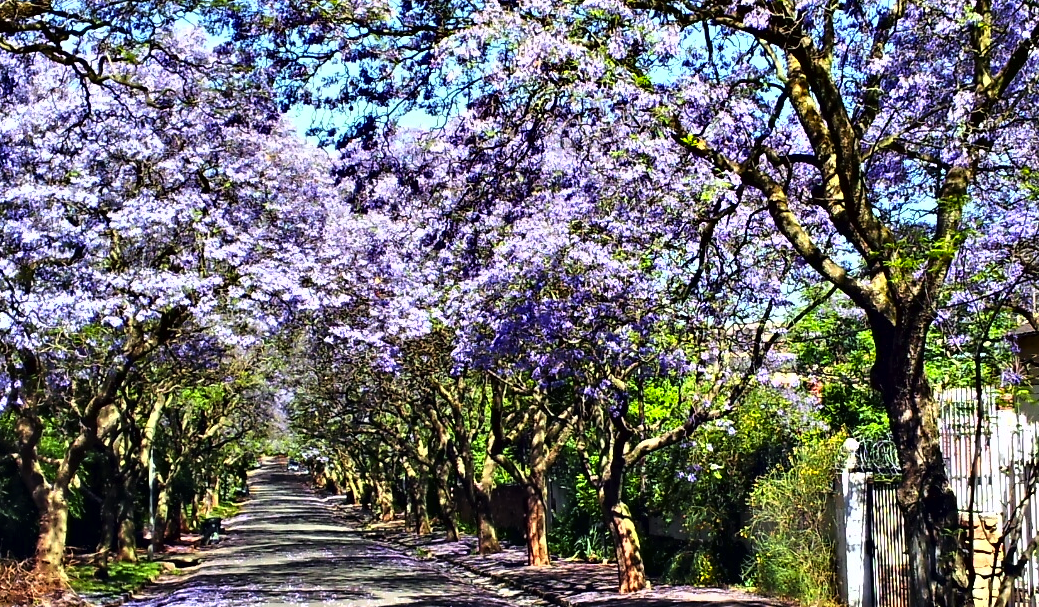
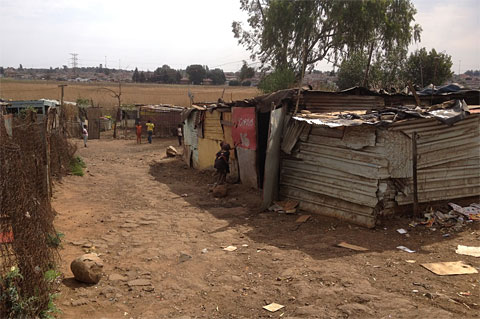


 Image Courtesy of Michal Zacharzewski ~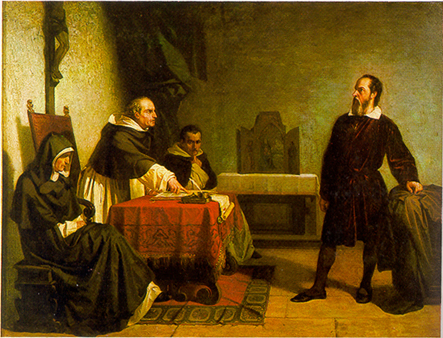






 INVOLUTION: Science and God: Reality Redefined